Quantum Computing for Software Engineers: Tools, Cloud Simulators, and Career Paths
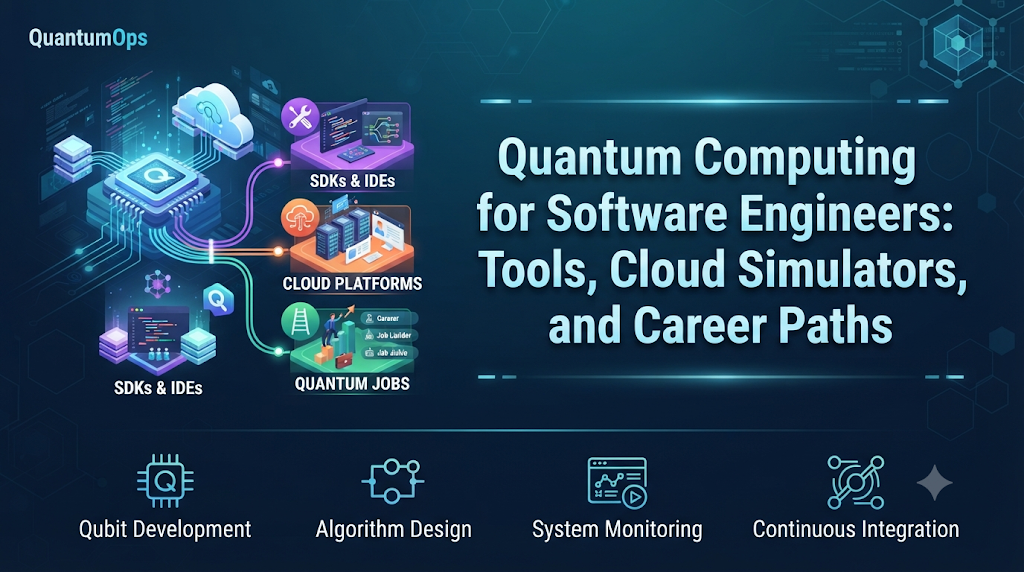
Almost every practical quantum project today is a hybrid project. A quantum device is rarely asked to run an entire application. Instead, it is asked to run a small, carefully built circuit, while ordinary software handles everything around it. Understanding this split is the key to understanding how quantum technology is used in real systems.
This article explains how that division of work looks in practice. It covers common workflow patterns, where time and money go, how to test hybrid programs, and what hybrid quantum classical computing training should teach. It also explains the limits, since hybrid methods do not automatically give better results.
Why One Computer Type Is Not Enough
A quantum device is good at one narrow job: running a circuit and returning measurement results. It is not built to clean data, store files, manage users, or draw reports. Classical computers do those tasks well and cheaply.
In a hybrid setup, the classical side:
- Prepares and checks the input data.
- Chooses the circuit settings.
- Sends the circuit to a simulator or device through a cloud service.
- Collects the returned measurements.
- Analyzes them and decides what to do next.
The quantum side only executes the circuit. Everything else stays classical. Because of this, a hybrid project depends as much on solid software and cloud skills as on quantum knowledge.
Three Common Workflow Patterns Explained
Most hybrid designs fall into one of three patterns.
- Wrap-around processing. Classical code prepares the input, runs one circuit, and processes the output. This is the simplest pattern and a good starting point for learning.
- Iterative loops. The classical program runs a circuit, studies the results, adjusts the circuit’s settings, and runs it again. This repeats until a stopping rule is met. Many optimization experiments use this pattern.
- Simulator-assisted validation. The same circuit is first run on a simulator to confirm that the logic is sound. Only then is a small number of runs sent to a real device for comparison.
These patterns can be combined. A project may start with the third, move to the first, and later try the second.
An Illustrative Factory Scheduling Scenario
Consider a made-up example, used only to show the division of work. A manufacturing team wants to study how jobs could be assigned to machines so that waiting time is reduced.
The classical software collects job lists and machine limits, then turns them into a small mathematical problem. A circuit that represents a simplified version of that problem is built and tested on a simulator. Next, the program sends the circuit to a cloud device, reads the measurement counts, and scores each outcome. It then adjusts the circuit settings and repeats the process several times. At the end, the classical side compares the best result with the schedule from the team’s current method.
This scenario does not claim that the quantum approach would win. The comparison with the current method is the point of the exercise, and the answer could easily be that classical tools remain better.
Where Time and Money Actually Go
Hybrid projects have costs that are easy to overlook.
- Queue time. Jobs may wait before a device runs them, and loops with many rounds can multiply that wait.
- Repeated runs. Each circuit is run many times to build a result, and more runs can raise cost.
- Round trips. Every step in a loop involves sending data to a service and getting it back.
- Simulator load. Classical simulation becomes heavy as circuits grow.
- Engineering effort. Building, logging, and reviewing workflows takes people’s time.
Check each provider’s official pricing and limits before planning, since these details change.
Testing Hybrid Programs With Confidence
Testing is harder when results are statistical, but a few habits help.
- Test the classical parts on their own, using ordinary software testing methods.
- Run circuits on a simulator first, with settings that can be repeated.
- Compare the spread of results, not a single run.
- Change one thing at a time when debugging.
- Record the circuit, tool versions, settings, and date for every experiment.
- Expect real devices to differ from simulators because of noise.
These habits turn a confusing experiment into a record that others can review and repeat.
What Hybrid Training Should Teach
Good hybrid quantum classical computing training connects quantum ideas with working software. Useful topics include:
- Qubits, gates, circuits, and measurement in plain language.
- Building circuits and checking them on simulators.
- Sending jobs through cloud services and reading results.
- Designing loops between classical and quantum steps.
- Tracking costs, queues, and access permissions.
- Writing tests and records for repeatable experiments.
Different learners will focus on different parts. A Qiskit programming course helps developers who want circuit-building skills, and AWS Braket training helps teams already working in that cloud. Quantum computing for software engineers usually begins with Python and basic probability. A quantum computing architecture course serves those who design systems, while quantum computing for IT managers helps leaders plan goals and budgets. Broader quantum cloud computing training covers access, jobs, and operations together.
QuantumOps School advertises four tracks named Architect, Engineer, Manager, and Professional. It lists labs, simulations, case studies, assessments, and capstone projects. When reviewing any quantum computing certification course, note that QuantumOps certification is a credential advertised by the provider. Independent accreditation and wide industry recognition were not established during review, and no program can promise a job or a business result. Organizations seeking outside help may also look at quantum computing consulting services, which are advertised capabilities and not independently verified outcomes.
Honest Limits Every Team Should Accept
- Real devices are small and noisy, which limits what a circuit can do.
- Many problems have no known quantum advantage.
- Hybrid loops can be slow because of queues and repeated calls.
- Better results depend on the algorithm, the hardware, the problem size, and the implementation. Nothing is automatic.
- Classical systems remain the better choice for most business tasks.
Teams that accept these limits early make better decisions and waste less effort.
Practical Questions About Hybrid Workflows
What Does the Classical Side Actually Do?
It prepares inputs, builds circuits, sends jobs, gathers results, analyzes them, and decides the next step. It also handles storage, logging, and security.
Why Repeat the Same Circuit Many Times?
A single run of a quantum circuit gives one random-looking outcome. Many runs reveal the pattern of probabilities, and that pattern is the useful result.
Does Hybrid Mean Faster Results?
Not by default. A hybrid design can sometimes help with certain problems, but speed and quality depend on many factors. Always compare against a strong classical method.
Where Should the Orchestration Code Run?
Usually on ordinary cloud or local computing resources, close to your data and tools. The provider’s documentation explains how jobs are submitted and what limits apply.
Can a Small Team Try This Safely?
Yes, if the experiment is small and clearly scoped. Start on simulators, set a spending limit, restrict access, and agree on a review date.
When Should a Pilot Be Stopped?
When its main questions have been answered, when costs pass the agreed limit, or when results show no useful signal. A clear stop rule keeps a pilot honest.
Is a Special Network Connection Needed?
Access usually goes through the provider’s online services, so ordinary secure cloud connections are normally the starting point. Confirm requirements in the provider’s official documentation.
Conclusion
Hybrid computing is best understood as a working arrangement in which each side does what it does well. Ordinary software carries most of the load, from data and logic to testing and records, while a quantum service takes on small, well-chosen circuits. The skill lies in drawing that boundary carefully, measuring the outcome fairly, and being willing to learn that the classical method is enough. Teams that practice this on simulators first, track their costs, and keep honest records will understand the technology far better than those who chase promises. That understanding is the most useful result a hybrid project can deliver today.
Leave a Reply