A Simple Look at the Technology Behind Google Cloud Delivery
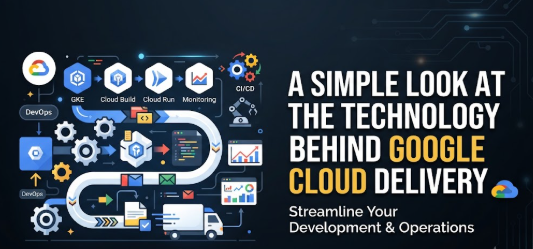
Cloud computing has reshaped how organizations build, deploy, and maintain software. Speed alone is no longer enough to stay competitive; systems must also remain available, secure, and resilient under unpredictable workloads. Bridging the gap between rapid product iteration and rock-solid platform reliability is the central mission of modern engineering teams.
The Google Cloud Professional Cloud DevOps Engineer credential focuses on this intersection of delivery velocity and system health. Rooted deeply in Site Reliability Engineering (SRE) principles pioneered by Google, this professional program helps engineers transition from manual administration to automated, data-driven cloud operations. This guide explores the foundational concepts, core architectural skills, toolsets, career pathways, and learning methodologies associated with becoming a proficient cloud operations professional on Google Cloud Platform (GCP).
What Is the Google Cloud Professional Cloud DevOps Engineer Credential?
The Google Cloud Professional Cloud DevOps Engineer credential validates an engineer’s ability to balance service reliability with delivery speed. It assesses practical competencies in building software delivery pipelines, deploying and managing infrastructure through automation, optimizing system performance, and managing incidents using objective engineering metrics.
Unlike entry-level cloud credentials that focus on cataloging various managed services, this professional-tier path evaluates how effectively you combine infrastructure as code, automated continuous integration and delivery (CI/CD), telemetry collection, and disaster management into a cohesive operating model. The objective is to certify that an engineer can translate abstract software code into a highly available, self-healing system operating within the Google Cloud ecosystem.
Organizations prioritize this credential because it signals operational maturity. Rather than relying on trial-and-error deployments or subjective guesses about infrastructure health, an engineer certified in this domain applies engineering practices to operations problems. This approach directly protects user experience and organizational reputation.
Why Is This Certification Important?
Modern digital platforms run continuously. A single hour of unexpected downtime or a delayed software patch can result in significant financial loss and permanent damage to customer trust. Consequently, the demand for professionals who understand automated delivery and distributed systems reliability continues to grow across all sectors.
Technology Trends Driving Demand
Enterprise infrastructure has shifted decisively away from monolithic, long-lived virtual machines toward containerized microservices and event-driven architectures. Orchestrating these microservices requires sophisticated automation. Technologies such as Kubernetes, managed service meshes, and declarative infrastructure code have become foundational. Understanding how to manage these dynamic components natively in Google Cloud makes an engineer an essential asset to engineering organizations.
Business and Operational Value
For businesses, downtime is expensive and manual releases slow progress. Organizations need teams that can deliver changes safely without breaking production environments. By adopting SRE philosophies, organizations replace subjective debates between developers and operators with data-driven agreements. Reliability becomes an engineering feature rather than an afterthought, allowing businesses to release new features rapidly while maintaining established performance targets.
Professional Validation
For engineers, mastering this domain marks a transition from reactive operational firefighting to proactive platform engineering. It demonstrates to leadership and peers that you can design self-healing architectures, implement scalable CI/CD pipelines, and manage mission-critical workloads using industry-standard reliability frameworks.
Key Features of the Certification
The professional DevOps pathway on Google Cloud stands out because it focuses directly on implementation patterns and architectural strategies rather than simple administrative tasks.
- Heavy SRE Foundation: Deep integration of Google’s Site Reliability Engineering framework, teaching teams how to manage operational friction through quantitative service levels and automated remediation.
- Production-Grade Delivery Pipelines: Thorough coverage of continuous integration, progressive delivery methodologies, artifact management, and automated release gates.
- Observable Infrastructure Focus: Emphasis on modern telemetry, moving beyond basic server monitoring into distributed tracing, structured application logging, and proactive alerting.
- Security-by-Design Automation: Practical embedding of security audits, identity restrictions, and vulnerability scanning directly inside automated delivery pipelines.
- Containerized Workload Orchestration: Advanced management of container ecosystems, primarily centered around Google Kubernetes Engine (GKE) and serverless execution environments like Cloud Run.
Skills You Can Learn
Preparing for this domain broadens an engineer’s technical toolkit across system architecture, pipeline design, operational telemetry, and incident leadership.
+-----------------------------------------------------------------------------------+
|               Google Cloud DevOps Engineering Skill Architecture                  |
+-----------------------------------------------------------------------------------+
|                                                                                   |
|   [ Infrastructure Automation ] -----> Terraform, Config Sync, Resource Manager   |
|                                                                                   |
|   [ Delivery Pipelines ]        -----> Cloud Build, Cloud Deploy, Artifact Registry|
|                                                                                   |
|   [ Reliability & SRE ]        -----> SLI/SLO Engineering, Error Budgets, Incident |
|                                                                                   |
|   [ Observability & Telemetry ] -----> Cloud Logging, Monitoring, Trace, Profiler |
|                                                                                   |
|   [ Platform Security ]        -----> Binary Authorization, Workload Identity     |
|                                                                                   |
+-----------------------------------------------------------------------------------+
1. Delivery Pipeline Engineering
You learn how to design, build, and optimize automated CI/CD workflows. This involves orchestrating source code check-ins, triggering automated container image compilation, running unit and integration tests, packaging immutable artifacts, and executing progressive rollout strategies such as blue-green and canary deployments.
2. Infrastructure as Code (IaC) Architecture
You develop the ability to provision, modify, and destroy cloud infrastructure predictably using declarative configuration languages. This includes managing complex state files, creating modular infrastructure components, enforcing security policies as code, and reconciling dynamic drift.
3. Service Level Engineering (SLIs, SLOs, and Error Budgets)
You master the methodology of defining meaningful Service Level Indicators (SLIs) that track true user experience, setting attainable Service Level Objectives (SLOs), and using Error Budgets to make objective, collaborative decisions about deployment velocity versus operational stability.
4. End-to-End Observability and Telemetry
You gain expertise in establishing deep visibility into distributed microservices. This includes instrumenting code with structured logging, setting up real-time platform metrics, configuring actionable dynamic alerts, tracing latency bottlenecks across microservices, and profiling live applications to locate memory leaks and CPU spikes.
5. Incident Management and Postmortem Leadership
You learn how to act calmly and effectively during high-severity production outages. This includes establishing incident response structures, conducting blameless root cause analyses, capturing actionable remediation tasks, and building automated failover routines to avoid future occurrences of the same failure mode.
6. Container Security and Supply Chain Integrity
You learn how to protect software supply chains from source to production. This covers vulnerability scanning for container images, establishing trusted build steps, enforcing digital signatures before image execution, and isolating service identities using the principle of least privilege.
Technologies Covered
To operate as a proficient cloud DevOps engineer, you work with an integrated set of tools and managed services across the Google Cloud platform and the open-source cloud-native landscape.
Continuous Integration and Deployment Tools
- Cloud Build: A serverless continuous integration and continuous delivery platform that executes builds on Google Cloud infrastructure with support for custom build steps.
- Cloud Deploy: A managed continuous delivery service that automates opinionated, progressive application releases to execution environments such as Google Kubernetes Engine and Cloud Run.
- Artifact Registry: A central, managed repository for storing, securing, and managing container images and language-specific software packages.
Workload Execution and Infrastructure Platforms
- Google Kubernetes Engine (GKE): A fully managed Kubernetes environment used to deploy, scale, and orchestrate containerized applications.
- Cloud Run: A fully managed serverless compute platform that enables engineers to run containers directly on top of Google’s scalable infrastructure.
- Compute Engine: Infrastructure-as-a-service providing scalable virtual machine instances, managed instance groups (MIGs), and autoscaling configurations.
- Terraform: The primary declarative open-source infrastructure-as-code tool used to define, provision, and maintain cloud resources reliably.
Observability and Performance Tools (Google Cloud Observability)
- Cloud Monitoring: Real-time visibility into the performance, uptime, and overall health of cloud-powered applications through metrics, dashboards, and automated alerts.
- Cloud Logging: A fully managed, high-scale service for storing, searching, analyzing, and alerting on log data and events from applications and infrastructure.
- Cloud Trace: A distributed tracing system that collects latency data from applications and displays how requests propagate across microservices.
- Cloud Profiler: Continuous, low-overhead CPU and memory profiling designed to identify performance bottlenecks directly inside production application code.
Security and Governance Frameworks
- Binary Authorization: A deploy-time security control that ensures only trusted, cryptographically signed container images are deployed onto managed clusters.
- Workload Identity: The recommended approach for assigning secure, fine-grained identity permissions to workloads running on managed Kubernetes environments without managing static credentials.
- Identity and Access Management (IAM): Granular access control mechanisms used to implement the principle of least privilege across pipelines, services, and human operators.
Who Should Consider This Certification?
This professional specialization serves a broad audience of technology professionals looking to modernize their technical practices and improve operational discipline.
Software Developers and Engineers
Application developers who want to understand how their code behaves once deployed to production. Learning DevOps and SRE principles helps software engineers write cloud-native, observable code and take ownership of deployment lifecycles.
Systems Administrators and Operations Engineers
Traditional systems administrators managing on-premises data centers or static virtual machine environments. This pathway provides the exact methodologies required to shift toward automated infrastructure management, containerization, and distributed cloud systems.
Cloud Architects and Team Leads
Technical leaders responsible for designing resilient cloud platforms. Understanding the operational realities of CI/CD, telemetry, and incident management ensures that architectural designs remain maintainable, cost-effective, and operationally realistic.
Site Reliability Engineers (SREs)
Practicing SREs seeking to benchmark their operational knowledge against Google’s authoritative framework. It grounds their practical experience in cloud-native operational paradigms and scalable platform services.
Quality Assurance and Release Engineers
Engineers focused on software quality who want to shift testing, security, and verification steps earlier into the delivery cycle through automated pipelines and progressive rollout patterns.
Step-by-Step Learning Guide
Mastering cloud DevOps and SRE principles requires a balanced blend of architectural theory and deliberate, hands-on practice. The following roadmap outlines an effective approach to acquiring these capabilities.
+--------------------------------------------------------------------------------+
|                             The DevOps Learning Roadmap                        |
+--------------------------------------------------------------------------------+
|  Step 1: Master Fundamentals (Linux, Networking, Cloud Architecture)           |
|                                     |                                          |
|  Step 2: Learn SRE Culture & Philosophy (SLIs, SLOs, Blameless Culture)         |
|                                     |                                          |
|  Step 3: Declarative Infrastructure (Terraform, State Management, Modules)     |
|                                     |                                          |
|  Step 4: Master Containers & Orchestration (Docker, GKE, Workload Identity)    |
|                                     |                                          |
|  Step 5: Architect End-to-End CI/CD (Cloud Build, Cloud Deploy, Artifacts)     |
|                                     |                                          |
|  Step 6: Build Observability & Monitoring (Logging, Metrics, Tracing, Alerts)  |
|                                     |                                          |
|  Step 7: Incident Management & Chaos Engineering (Failover, Postmortems)       |
|                                     |                                          |
|  Step 8: Review Complex Topologies & Refactor Architectures                   |
+--------------------------------------------------------------------------------+
Step 1 – Master the Core Fundamentals
Before building complex deployment pipelines, ensure your foundational skills are rock-solid. Review operating system concepts, Linux shell scripting, networking primitives (VPCs, firewalls, DNS, load balancing), and core cloud storage architectures. You cannot diagnose a broken deployment pipeline if you do not understand basic IP routing or file permissions.
Step 2 – Internalize the SRE Culture and Philosophy
Study the foundational principles of Site Reliability Engineering. Familiarize yourself with how Google defines the operational trade-offs between velocity and reliability. Understand the mathematics of service level agreements, how to calculate error budgets, and why blameless postmortems are critical to organizational continuous improvement.
Step 3 – Implement Declarative Infrastructure as Code
Move away from configuring cloud resources manually through graphical user interfaces. Practice using Terraform to define basic networks, compute instances, storage buckets, and access permissions. Learn to write reusable modules, manage remote state files safely, and implement automated validation routines inside pull requests.
Step 4 – Containerize Workloads and Master GKE
Containerize multi-tier web applications using standard containerization tools. Deploy those containers onto Google Kubernetes Engine. Focus on the operational aspects of Kubernetes: creating robust readiness and liveness probes, configuring Horizontal Pod Autoscalers, managing resource requests and limits, and securing network policies.
Step 5 – Architect Scalable Delivery Pipelines
Build automated CI/CD pipelines using Cloud Build and Cloud Deploy. Start with simple tasks: trigger builds automatically when pull requests merge, compile source code, and run unit tests. Expand these pipelines into multi-environment continuous delivery workflows that push container images into Artifact Registry, enforce security verification, and execute progressive rollouts onto GKE or Cloud Run.
Step 6 – Implement Telemetry and Dynamic Observability
Integrate Cloud Monitoring and Cloud Logging into your deployed applications. Learn how to export custom application metrics, design clear operations dashboards, and configure alerting policies that trigger only on actionable, user-impacting symptoms. Practice setting up distributed tracing to pinpoint latency across multiple microservices.
Step 7 – Practice Incident Management and Chaos Scenarios
Intentionally inject failure modes into your practice environments. Terminate running nodes, revoke database permissions, simulate upstream network latency, and flood your endpoints with artificial traffic. Practice resolving these incidents methodically, checking logs and metrics, restoring service, and documenting blameless incident reviews.
Step 8 – Refactor and Reinforce Complex Scenarios
Combine all individual disciplines into comprehensive projects. Create an automated platform where an infrastructure change, application update, and security scan run seamlessly through declarative code, fully guarded by automated canary rollouts and instant rollback thresholds.
Core Concepts Explained Simply
1. Service Level Indicators (SLIs) vs. Service Level Objectives (SLOs)
An SLI is a quantifiable metric that measures how well a service is performing right now from the perspective of an end user. Common examples include latency (how many milliseconds a response took) and availability (what percentage of requests returned successful status codes).
An SLO is a target reliability percentage that the engineering team agrees to maintain over a defined time window (such as a rolling 30-day period). For instance, a team might agree that 99.9% of all requests must return successfully in under 200 milliseconds.
2. Error Budgets
An Error Budget is simply the inverse of an SLO. If your availability SLO is 99.9%, your error budget is 0.1% of allowable failures over that same period. Rather than striving for unrealistic 100% perfection, the error budget provides a quantitative balance between speed and reliability:
- When your error budget is full, your team can deploy updates rapidly and experiment aggressively.
- When your error budget is exhausted due to unexpected outages, deployments slow down, and engineering efforts shift entirely toward improving stability, performance, and automated testing.
3. Continuous Delivery with Canary Deployments
In a traditional deployment, new software versions often replace old versions all at once. If a bug slips through testing, every user experiences the failure simultaneously.
A canary deployment mitigates this risk by releasing the new software version to a tiny slice of live production traffic (for example, 2% of incoming requests). Observability systems monitor error rates and latency on that small cohort. If metrics remain healthy, traffic to the canary version scales up gradually (10%, 25%, 50%, 100%). If anomalies surface, traffic reverts instantly to the stable version, shielding the vast majority of users from disruption.
4. GitOps and Continuous Reconciliation
GitOps is an operational model where an organization’s Git repositories act as the single source of truth for all infrastructure definitions and application deployments.
Instead of engineers manually pushing updates to cloud environments, continuous reconciliation agents run inside the infrastructure. These agents constantly compare the live operating environment against the declarative configurations stored in version control. If an unauthorized human makes an ad-hoc configuration change in the cloud console, the reconciliation agent automatically detects the drift and reverts the cluster back to the state declared in Git.
Real-World Use Cases
The practical methodologies covered in cloud DevOps workflows solve concrete engineering and organizational challenges across modern enterprises.
+---------------------------------------------------------------------------------+
|                                 Real-World Use Cases                            |
+---------------------------------------------------------------------------------+
| 1. High-Traffic Retail Platforms: Dynamic auto-scaling & zero-downtime rollouts |
| 2. Regulated Financial Systems: Auditable CI/CD pipelines & supply chain guards |
| 3. Digital Media & Streaming: Rapid bottleneck detection via distributed trace   |
| 4. Software-as-a-Service (SaaS): Rapid provisioning via standardized Terraform  |
| 5. Healthcare Data Services: Automated policy validation & blameless recoveries |
+---------------------------------------------------------------------------------+
- High-Traffic Retail Platforms: A global e-commerce enterprise handling millions of concurrent transactions leverages progressive canary deployments on GKE. By coupling Cloud Deploy rollouts with automated Cloud Monitoring alerts, the team tests checkout upgrades safely against live user traffic, rolling back within seconds if checkout latency rises.
- Financial Payment Gateways: A financial services provider implements strict software supply chain security. Cloud Build pipelines automatically compile code, generate software bills of materials (SBOMs), scan images for vulnerabilities, and sign verified artifacts. In production, Binary Authorization blocks any container image that lacks a valid signature, preventing untrusted code execution.
- Global Streaming Platforms: A media streaming service managing hundreds of interconnected microservices uses distributed tracing and continuous profiling to identify microservice latency bottlenecks during global sporting events. This instrumentation allows engineers to optimize memory allocations and cache policies proactively before buffering affects viewers.
- Rapid Multi-Tenant SaaS Provisioning: A business software company uses modular Terraform configurations to spin up isolated, multi-tenant application stacks automatically whenever an enterprise customer signs a contract. By treating networks, clusters, databases, and IAM bindings as code, tenant provisioning time drops from weeks of manual configuration to minutes of automated execution.
- Regulated Healthcare Workloads: A digital health platform subject to strict compliance standards uses automated GitOps workflows to deploy updates. All infrastructure adjustments are peer-reviewed in version control, verified by automated security linters, and synchronized without direct human access to production database systems.
Career Opportunities and Industry Roles
Mastering cloud DevOps and site reliability methodologies opens doors to various rewarding engineering paths. Rather than confining professionals to narrow support functions, these skills are fundamental to scalable product engineering.
Site Reliability Engineer (SRE)
Site Reliability Engineers design and maintain automated systems that keep production environments running predictably. They split their time between developing software tools to automate away operational tasks and monitoring platform reliability using quantitative metrics like SLIs and SLOs.
Cloud Platform Engineer
Platform Engineers build internal developer platforms (IDPs). They package cloud infrastructure, delivery pipelines, and observability tools into self-service workflows that enable software developers to build, test, and run applications without having to manually configure underlying cloud resources.
Cloud DevOps Engineer
DevOps Engineers build and optimize automated software delivery pipelines. They collaborate closely with application developers and operations teams to streamline code integrations, accelerate release cadences, enforce automated quality testing, and manage staging and production environments.
Cloud Infrastructure Architect
Infrastructure Architects design large-scale, resilient, and cost-effective cloud foundations. They determine network topologies, identity boundaries, disaster recovery strategies, and governance standards across an organization’s cloud footprints.
Cloud Security and Release Engineer
These engineers bridge the gap between compliance, security, and continuous delivery. They focus on embedding automated vulnerability scanners, identity policies, container image signing, and zero-trust network rules directly into deployment pipelines.
Benefits of Earning This Certification
Pursuing and achieving this level of professional engineering validation provides distinct practical advantages for your career and daily engineering work.
- Validation of Real-World Engineering Competence: Demonstrates that your knowledge extends far beyond theoretical concepts into practical application lifecycle management, infrastructure automation, and systemic problem resolution.
- Mastery of Site Reliability Engineering Principles: Connects you directly with industry-standard SRE practices, transforming how you measure operational success and manage business trade-offs.
- Architectural Problem-Solving Capabilities: Equips you to analyze cascading failures across distributed microservices methodically using logs, traces, and metrics rather than unguided guesswork.
- Enhanced Professional Visibility: Signals to employers and engineering leaders that you possess the advanced skills required to modernize delivery workflows and maintain platform reliability.
- Structured, Comprehensive Knowledge Base: Helps fill the technical blind spots that often arise when engineers learn tools on the job, giving you an organized, end-to-end perspective on cloud operations.
- Long-Term Adaptability: The tools, patterns, and principles learned—such as declarative infrastructure, telemetry instrumentation, and progressive delivery—are broadly applicable across modern cloud-native computing.
Common Learning Challenges (and Solutions)
Mastering cloud operations involves overcoming several distinct hurdles. Recognizing these difficulties early helps you structure an effective study approach.
1. Navigating the Complexity of Kubernetes and GKE
The Challenge: Kubernetes introduces dozens of interdependent abstractions, including Pods, Deployments, Services, Ingress controllers, ConfigMaps, and Custom Resource Definitions. New learners frequently feel overwhelmed trying to understand where networking ends and application orchestration begins.
The Solution: Build up your mental model incrementally. Start by running simple standalone containers. Next, deploy a basic Pod manually on a small cluster. Gradually add a Service for networking, introduce a Deployment for replica management, and experiment with health probes. Breaking the platform down into component layers makes orchestration manageable.
2. Shifting from Subjective Metrics to SRE Mathematics
The Challenge: Traditional operations often measure success vaguely, such as asking whether servers “look healthy.” Transitioning to rigorous SLIs, SLOs, and Error Budgets requires unfamiliar statistical thinking and organizational discipline.
The Solution: Pick one application you manage and define a single user journey (such as checking out or loading a profile page). Write out a concrete formula: Good Events divided by Total Events. Calculate what 99.9% uptime means in minutes of downtime over a month, and practice using that number to prioritize maintenance work over new features.
3. Understanding Distributed Telemetry
The Challenge: Aggregating logs is straightforward, but correlating logs, metrics, distributed traces, and continuous profiling data across microservices can be confusing.
The Solution: Deploy a sample open-source microservices application in a development sandbox. Use OpenTelemetry libraries to propagate trace contexts between services. Trigger intentional errors and review trace waterfalls in Cloud Trace to see how an error in a downstream database shows up as latency at the upstream API gateway.
Common Mistakes to Avoid
Avoiding common learning pitfalls will make your preparation far more efficient and effective.
- Skipping Foundational Linux and Networking Primitives: Diving directly into managed services without understanding subnets, routing tables, DNS resolution, HTTP status codes, and Linux system calls leads to confusion when debugging unexpected deployment failures.
- Relying Solely on Video Lectures: Passively watching video walkthroughs creates an illusion of competence. Real engineering competence develops when you open a terminal, configure infrastructure, encounter unexpected errors, and debug them yourself.
- Treating Infrastructure as Manual Work: Avoid provisioning practice resources through the web console. Force yourself to define every storage bucket, cluster, and network using declarative Terraform files from the beginning.
- Ignoring Blameless Culture and SRE Methodologies: Focusing exclusively on tools while ignoring SRE practices misses the entire philosophy behind Google’s operations model. Tools will evolve, but reliability principles remain consistent.
- Memorizing Declarative Syntax: Do not waste energy memorizing every flag or YAML parameter. Focus on understanding configuration structures, where to find documentation, and how components interact.
- Neglecting Progressive Delivery Patterns: Do not stop at basic all-or-nothing deployments. Ensure you understand how to implement canary releases, automated rollbacks, and blue-green environments using modern continuous delivery tools.
Comparison: Traditional Operations vs. Modern Cloud DevOps & SRE
To understand the value of this skill set, it helps to compare traditional infrastructure operations with modern cloud DevOps and Site Reliability Engineering practices.
| Dimension | Traditional IT & Operations | Modern Cloud DevOps & SRE |
|---|---|---|
| Infrastructure Provisioning | Manual server installations, physical cabling, static configuration checklists | Declarative Infrastructure as Code (Terraform), version-controlled repositories, automated execution |
| Deployment Methodology | Scheduled maintenance windows, late-night manual releases, high risk of disruption | Continuous delivery, progressive rollouts (canary/blue-green), automated rollbacks |
| System Visibility & Monitoring | Fragmented server checks (CPU/disk alerts), reactive responses after outages occur | Unified telemetry (metrics, structured logs, distributed traces), symptom-based proactive alerting |
| Reliability Measurement | Unattainable targets (aiming for 100% uptime), subjective assessments of system health | Service Level Indicators (SLIs), Service Level Objectives (SLOs), calculated Error Budgets |
| Organizational Relationship | Siloed teams with conflicting incentives (Developers push changes, Operations resists changes) | Shared engineering responsibility, blameless reviews, automated release guardrails |
| Incident Resolution | Reactive firefighting, undocumented manual repairs, individual blame assignment | Standardized incident management, automated failover systems, blameless postmortems |
| Security Verification | Periodic manual reviews and audits late in the project lifecycle | Continuous automated security checks, container image scanning, cryptographic binary verification |
Frequently Asked Questions (FAQs)
What distinguishes a Cloud DevOps Engineer from a traditional Systems Administrator?
A traditional systems administrator generally manages servers, user accounts, and operating system updates manually or through discrete configuration scripts. In contrast, a modern Cloud DevOps Engineer treats all infrastructure, pipelines, and operational guardrails as software code. They design automated delivery systems, build self-healing cloud platforms, manage containerized microservices, and use data-driven SRE metrics to balance feature velocity with platform stability.
Do I need to be an expert software developer to succeed in this domain?
You do not need to be a full-stack application developer, but you must understand practical programming and scripting concepts. DevOps engineers regularly write automation scripts, configure complex declarative configuration files (such as YAML and HCL), read application stack traces, instrument microservices with telemetry code, and optimize deployment logic. A working knowledge of languages like Python, Go, or Bash is essential for daily platform tasks.
What is the practical value of Error Budgets in engineering organizations?
Error Budgets bridge the cultural gap between product development teams and operations engineers. Rather than aiming for unrealistic 100% uptime, an Error Budget quantifies the acceptable amount of unreliability over a given period. When the budget is healthy, teams can deploy features rapidly. When the budget is depleted by outages, deployment velocity automatically pauses so teams can focus exclusively on platform stability and technical debt.
How does continuous delivery differ from continuous deployment?
Continuous delivery automates the building, testing, and staging of software changes, ensuring that code is always in a release-ready state while leaving the final deployment decision to human approval. Continuous deployment takes automation one step further: every change that passes all automated tests and quality gates automatically rolls out directly to production environments without any manual human intervention.
Why is declarative infrastructure preferred over imperative scripting?
Imperative scripts specify the exact step-by-step commands needed to configure infrastructure (such as “create VM, then attach disk, then install package”). If the script fails halfway through, recovery can be messy. Declarative infrastructure, such as Terraform, specifies the desired end state (such as “three web servers behind a load balancer”). The underlying engine automatically calculates the differences between the live environment and the desired state, provisioning only what is needed.
How do Service Level Indicators (SLIs) improve system monitoring?
Traditional monitoring often bombards operations teams with noisy alerts whenever a CPU spikes or a server restarts, even if end users notice no degradation. SLIs focus exclusively on metrics that directly affect the end-user experience, such as successful request percentages or end-to-end response latency. By alerting only when SLIs degrade, engineering teams avoid alert fatigue and address real customer-facing issues immediately.
What is the role of Binary Authorization in modern cloud security?
Binary Authorization acts as an automated security gatekeeper inside containerized environments like Google Kubernetes Engine. It enforces cryptographic signature checks on container images before they are permitted to run. During the CI/CD pipeline, automated security scanners verify that the code has passed vulnerability checks, unit tests, and policy validations, signing the image only when all requirements are satisfied.
Can individuals from non-cloud backgrounds transition into Cloud DevOps?
Yes, professionals with backgrounds in on-premises infrastructure, quality assurance, software development, or systems administration transition successfully into Cloud DevOps. The transition requires developing proficiency in declarative infrastructure as code, container orchestration, automated delivery pipelines, and SRE philosophies. Success depends on building hands-on projects rather than just studying concepts theoretically.
What is the difference between structured logging and traditional logging?
Traditional logging outputs arbitrary lines of unstructured plain text. Searching through millions of lines of unstructured logs requires complex regular expressions and significant compute power. Structured logging outputs events in a standardized format, usually JSON. Each event contains key-value pairs for fields like user ID, latency, HTTP status, and severity. This makes logs rapidly searchable, filterable, and aggregatable within systems like Cloud Logging.
How does distributed tracing help diagnose application performance issues?
In a microservices architecture, a single user click may trigger dozens of internal requests across multiple underlying services and databases. Distributed tracing injects a unique trace ID into the initial request header and propagates it through every downstream service. Observability tools assemble these hops into a visual waterfall diagram, showing engineers precisely which microservice or database query caused a latency spike or error.
Final Summary
Modern cloud engineering requires far more than spinning up virtual servers and writing deployment scripts. As systems grow in scale and complexity, organizations need engineers who can build reliable, observable, and automated delivery platforms.
The Google Cloud Professional Cloud DevOps Engineer domain emphasizes this balanced approach:
- It integrates the engineering discipline of Site Reliability Engineering with the velocity of modern CI/CD pipelines.
- It emphasizes managing infrastructure declaratively through code, standardizing application environments on managed container services like GKE and Cloud Run, and securing every stage of the software supply chain.
- It replaces subjective operational arguments with transparent, data-driven reliability targets using SLIs, SLOs, and Error Budgets.
Whether you are an experienced systems administrator modernizing your operational approach, a software engineer looking to take full ownership of production platforms, or a technical lead designing resilient cloud architectures, mastering these concepts will help you build and operate dependable cloud platforms at enterprise scale.
Leave a Reply