The Evolution of Military Technology From Historical Systems to Modern Capabilities
Introduction
Modern defense systems and military organizations operate within complex, interconnected environments where strategy, technology, logistics, and leadership must align to achieve objectives. Understanding these multifaceted domains requires structured educational resources that go beyond basic summaries to explore how strategic theory translates into organizational reality. WarOpsX serves as a comprehensive educational platform designed to address this need. By examining subjects such as military strategy, defense studies, logistics, organizational structures, and emerging technologies, the platform provides learners with foundational knowledge of how modern security environments function. Exploring these interconnected topics helps students, researchers, and professionals build a clear, structured understanding of the systems that shape global defense and strategic decision-making.
What Is WarOpsX?
WarOpsX is an educational platform focused on military strategy, defense studies, operational concepts, emerging technologies, organizational systems, and the evolution of modern defense environments. Rather than focusing on tactical combat instruction, the platform provides students, researchers, defense enthusiasts, policy learners, and professionals with structured resources for understanding how strategic objectives, technology, leadership, logistics, information, and organizational readiness connect within complex defense systems.
The platform’s core purpose is to make intricate defense concepts accessible through clear, educational content. By organizing information around structured subject areas, it helps readers examine the underlying mechanisms of defense organizations without relying on sensationalized or overly technical jargon. WarOpsX emphasizes high-level educational understanding, enabling users to trace the relationships between historical developments, modern technologies, logistical networks, and institutional frameworks.
Why Is WarOpsX Relevant for Defense and Military Education?
Studying defense and military concepts often presents a challenge because these fields involve numerous specialized and interdependent elements. A standalone study of weapons technology, for instance, provides little insight unless it is connected to the logistical networks required to sustain it and the command systems used to direct it.
A structured educational resource like WarOpsX is relevant because it bridges these gaps. It provides readers with a holistic view of how strategy, operations, logistics, technology, organizational structures, and information systems interact. By exploring these topics within a unified framework, learners can develop a deeper appreciation of the complexities involved in maintaining organizational readiness and executing strategic objectives. This educational approach supports anyone seeking to understand the foundational principles that govern modern defense systems and historical military developments alike.
Military Strategy
Military strategy forms the bedrock of defense planning and organizational direction. At its core, military strategy refers to the application of national or organizational power to achieve specific political or security objectives. It involves establishing clear goals, determining the most effective ways to utilize available resources, and anticipating potential challenges or counteractions.
Understanding military strategy requires examining the relationship between overarching policy objectives and practical execution. Strategic planning involves weighing risks, prioritizing objectives, and coordinating various instruments of power. Throughout history, strategic thinking has evolved from simple linear campaigns to complex, multidimensional frameworks that account for political, economic, and technological factors. Studying strategy helps learners understand why organizations make specific long-term choices and how broad objectives guide operational decisions.
Defense Studies
Defense studies is a multidisciplinary academic and professional field that examines military organizations, conflict, peace, security policy, and strategic behavior. Unlike narrow technical training, defense studies encompasses strategic analysis, military history, organizational behavior, technology integration, logistics, and international security environments.
This field encourages critical inquiry into how defense policies are formulated and how military institutions adapt to changing global landscapes. By engaging in policy learning and academic research, students of defense studies explore the social, economic, and political dimensions of security. This broad perspective enables learners to evaluate contemporary security challenges objectively and understand the complex institutional frameworks that govern armed forces.
Military Operations
Military operations translate strategic intent into coordinated action. From an educational perspective, studying military operations involves examining operational planning, objective setting, synchronization, sustainment, and decision-making processes.
It is essential to distinguish between strategic, operational, and tactical levels. While tactics involve the specific execution of tasks in a localized setting and strategy defines overarching long-term goals, operations serve as the bridge between the two. Operational planning requires commanders and planners to coordinate multiple units, manage timelines, secure supply lines, and maintain situational awareness. Understanding operations highlights the immense organizational effort required to synchronize diverse elements toward a common objective.
Military Logistics
Military logistics is often described as the backbone of any defense organization. Without effective logistical support, even the most sophisticated strategy or advanced technology cannot succeed. Logistics encompasses supply chains, transportation, maintenance, resource management, sustainment, and the infrastructure needed to keep forces equipped and operational.
Logistics involves forecasting requirements, managing inventories, repairing complex equipment, and moving personnel and materiel across vast distances. Studying logistics reveals the immense administrative and engineering challenges inherent in defense organizations. It demonstrates that operational success depends as much on fuel, spare parts, medical supplies, and transport networks as it does on strategic planning and leadership.
Command and Control Systems
Command and control systems refer to the combination of personnel, procedures, equipment, and communication networks that leaders use to exercise authority and direct operations. Effective command and control ensures that decision-makers receive timely information, maintain situational awareness, and communicate orders clearly across organizational hierarchies.
These systems involve leadership structures, information management protocols, and coordination mechanisms. In modern environments, command and control relies heavily on secure communication networks and data processing tools to help leaders make informed decisions under pressure. Understanding this area highlights how information flows within an organization and how command relationships shape accountability and responsiveness.
Defense Technology
Defense technology encompasses the scientific and engineering innovations utilized by military and defense organizations. This field covers artificial intelligence, autonomous systems, advanced sensors, secure communications, simulation software, cyber capabilities, and data analysis tools.
Technology significantly influences modern defense organizations by enhancing situational awareness, improving communication speed, and increasing the precision of operations. However, technology does not operate in isolation; its effectiveness depends on how well it integrates with existing organizational structures, logistical networks, and training programs. Exploring defense technology from an educational standpoint helps readers understand both the capabilities and the limitations of modern systems.
Military History
Military history is a vital educational tool that provides context for contemporary defense structures and strategic thinking. By examining past campaigns, technological shifts, organizational reforms, and leadership decisions, students can identify recurring patterns and lessons that remain relevant today.
Historical study goes beyond recording dates and battles; it explores institutional change, strategic miscalculations, and the adaptation of armed forces to new challenges. Whether analyzing logistical innovations in past conflicts or the evolution of strategic doctrine, military history helps learners understand how today’s defense concepts developed over centuries of trial and adaptation.
Military Organizational Structure
Military organizational structure defines the formal hierarchy, command relationships, unit types, and institutional models that govern defense organizations. Structure determines how responsibility is distributed, how information flows, and how different branches or joint forces coordinate their efforts.
Understanding organizational models—such as divisional structures, joint force commands, and specialized administrative branches—helps explain how large, complex institutions maintain order and efficiency. Organizational structure directly affects communication speed, operational flexibility, and accountability within defense institutions.
Multidomain Operations
Multidomain operations represent the coordination and synchronization of activities across multiple distinct environments: land, maritime, air, space, cyber, and information. Modern defense environments require organizations to operate seamlessly across these domains, recognizing that an action in one domain can instantly impact another.
Studying multidomain operations helps readers understand how contemporary security challenges transcend traditional boundaries. It highlights the necessity of cross-functional coordination, technical interoperability, and integrated planning in environments where information and cyber capabilities are just as critical as physical positioning.
Intelligence Surveillance and Reconnaissance
Intelligence, surveillance, and reconnaissance (ISR) systems form the information-gathering apparatus of defense organizations. ISR involves collecting raw data through sensors and human observation, analyzing that information to extract meaningful insights, and monitoring environments to maintain continuous situational awareness.
Effective ISR supports strategic and operational decision-making by reducing uncertainty and providing early warnings of potential developments. Educational exploration of ISR focuses on information management principles, analytical frameworks, and the vital role that accurate information plays in guiding organizational choices.
How These Defense Areas Connect
The subjects covered by WarOpsX do not exist in isolation; they form a tightly integrated web where each element influences the others. The conceptual flow begins with Military Strategy, which defines the overarching goals and direction. Strategy informs Military Operations, determining how objectives are pursued in practice.
However, operations cannot be sustained without Military Logistics, which provides the necessary supplies, transport, and maintenance infrastructure. To direct these operations and logistical networks, leaders rely on Command and Control Systems, which facilitate communication, coordination, and decision-making.
Underpinning these processes is Information, processed through Intelligence Surveillance and Reconnaissance, which feeds accurate data into command channels. Furthermore, Defense Technology enhances the tools available for communication, analysis, and execution, while Military Organizational Structure dictates how personnel and units are arranged to carry out these responsibilities.
Finally, examining Military History provides the contextual foundation that links past strategic developments to modern concepts, ensuring a comprehensive understanding of institutional evolution and strategic thought.
Key Elements Covered by WarOpsX
- Strategy: The overarching goals, risk assessments, and long-term planning frameworks that guide defense efforts.
- Operations: The coordination, planning, and execution of activities that translate strategy into action.
- Logistics: The complex supply chains, transportation networks, and sustainment systems required to support organizations.
- Command and Control: The leadership structures, communication protocols, and information management systems that direct forces.
- Technology: The digital, mechanical, and electronic innovations influencing modern defense capabilities.
- History: The historical record of past campaigns, institutional changes, and strategic evolution.
- Organizational Structure: The hierarchical models, unit designs, and command relationships governing defense institutions.
- Multidomain Environments: The interaction and coordination across land, sea, air, space, cyber, and information domains.
- Intelligence and Information: The collection, monitoring, and analysis mechanisms that support situational awareness.
- Defense Studies: The broader academic and professional field encompassing security policy, strategic analysis, and institutional learning.
Benefits of Learning These Defense Concepts
Developing a solid understanding of military and defense concepts offers several distinct educational advantages:
- Enhances familiarity with professional defense terminology and literature.
- Provides historical context for understanding current global security discussions.
- Clarifies the relationship between high-level strategy and practical execution.
- Improves comprehension of organizational design and institutional hierarchy.
- Highlights the critical role of logistics and sustainment in large-scale operations.
- Offers insight into the integration of modern technology within defense systems.
- Strengthens critical thinking regarding information management and decision-making.
- Connects historical precedents with contemporary multidomain security challenges.
Step-by-Step Approach to Studying Military and Defense Systems
Step 1: Start With Basic Terminology
Begin by familiarizing yourself with common defense and military terms. Understanding foundational vocabulary ensures that subsequent reading on strategy, logistics, and organizations remains clear and accessible.
Step 2: Understand Military Strategy
Examine how overarching goals are formulated. Study the relationship between political objectives, available resources, and long-term planning to grasp why strategic decisions are made.
Step 3: Study Military Operations
Explore how strategic intent translates into operational plans. Learn about the coordination, timing, and synchronization required to manage large-scale activities without focusing on tactical combat details.
Step 4: Learn About Military Organizational Structure
Investigate the hierarchy and command relationships within defense institutions. Understand how units are organized, how responsibilities are delegated, and how joint forces coordinate.
Step 5: Understand Military Logistics
Analyze the mechanics of supply chains, resource management, maintenance, and transportation. Recognize how logistical readiness underpins all organizational activities.
Step 6: Study Information and Command Systems
Examine how leadership communicates, processes information, and maintains situational awareness. Understand the role of command structures in supporting timely decision-making.
Step 7: Examine Technology and Multidomain Environments
Explore how modern innovations—such as AI, sensors, and cyber capabilities—interact with traditional military systems across land, sea, air, space, and information domains.
Step 8: Use Military History to Connect the Concepts
Review historical examples and institutional evolution to see how past strategic choices, technological shifts, and organizational reforms shaped the modern defense landscape.
Common Mistakes When Studying Military and Defense Topics
- Studying technology without understanding strategy: Assuming advanced technology automatically guarantees success without examining the strategic goals guiding its use.
- Ignoring logistics: Overlooking the vital role of supply chains, transport, and maintenance when evaluating military capabilities.
- Treating military history as only a list of battles: Reducing historical study to dates and conflict outcomes rather than analyzing institutional change and strategic thinking.
- Confusing strategy and tactics: Failing to distinguish between broad long-term objectives and localized execution methods.
- Ignoring organizational structure: Overlooking how command relationships and institutional hierarchies affect communication and accountability.
- Treating information as separate from decision-making: Neglecting the importance of intelligence and data management in shaping leadership choices.
- Assuming technology alone determines outcomes: Ignoring the human, organizational, and logistical factors that influence institutional effectiveness.
- Ignoring historical context: Applying modern assumptions to past eras without understanding the technological and political constraints of the time.
- Treating different defense domains as completely independent: Failing to recognize how land, sea, air, cyber, and space environments continuously interact.
Practical Tips for Students and Researchers
- Start with introductory glossaries to build a strong vocabulary before tackling complex strategic texts.
- Compare historical examples with modern developments to identify recurring patterns in institutional adaptation.
- Study strategy and operational planning side-by-side to understand how high-level goals influence practical coordination.
- Examine organizational charts and command structures to visualize how responsibility is distributed within defense institutions.
- Dedicate time to understanding logistics, focusing on how supply networks and maintenance schedules sustain large organizations.
- Follow developments in defense technology critically, keeping in mind the limitations and integration challenges of new systems.
- Pay attention to information management practices and how intelligence supports situational awareness.
- Read academic and policy perspectives from multiple viewpoints to maintain a balanced, objective understanding.
- Take structured notes on the relationships between strategy, logistics, technology, and organizational design.
- Utilize structured educational platforms like WarOpsX to organize your study topics systematically.
Who Can Benefit From WarOpsX’s Educational Content?
30.1 Students
Students pursuing political science, international relations, or security studies can use structured educational platforms to build a solid foundation in defense terminology, organizational models, and strategic history, supporting their academic coursework.
30.2 Researchers
Researchers examining defense policy, military history, or technological integration can access organized conceptual overviews and thematic breakdowns to support literature reviews and analytical frameworks.
30.3 Defense Studies Learners
Individuals exploring defense studies independently can utilize structured guides to navigate complex topics ranging from logistics and command systems to multidomain operations in a clear, logical sequence.
30.4 Policy Learners
Policy learners seeking to understand how strategic objectives, organizational readiness, and defense technology intersect can gain valuable insights into the institutional realities that shape security decisions.
30.5 Defense Technology Professionals
Engineers, software developers, and technical professionals working in defense-related industries can broaden their understanding of the broader operational, strategic, and logistical environments in which their technologies are deployed.
30.6 Defense Enthusiasts and General Readers
General readers with an interest in military history, strategy, and modern defense concepts can explore accessible, non-promotional educational resources that explain intricate topics without requiring specialized professional backgrounds.
Major Educational Subject Areas
| Subject Area | What It Covers | Why It Matters | Related Areas |
| Military Strategy | Long-term planning, objective setting, resource allocation | Directs the overall application of organizational power | Operations, Defense Studies |
| Military Logistics | Supply chains, transportation, maintenance, sustainment | Ensures forces remain equipped and operational | Organizational Structure, Operations |
| Command and Control | Leadership structures, communication networks, decision-making | Directs information flow and organizational authority | Information Systems, Strategy |
| Defense Technology | AI, sensors, communication tools, cyber capabilities | Influences situational awareness and operational capabilities | Multidomain Operations, ISR |
| Military History | Past campaigns, institutional evolution, strategic shifts | Provides context for modern defense concepts and strategy | Defense Studies, Strategy |
Real-World and Historical Context
Examining historical and documented examples helps clarify how abstract defense concepts manifest in reality. For instance, the expansion of logistical networks during large-scale historical campaigns demonstrated that advancing forces could only move as far as their supply lines allowed. When logistical planning failed, well-formulated strategies frequently stalled, illustrating the absolute dependency of operations on sustainment.
Similarly, the evolution of command and control systems throughout the twentieth century highlights the growing importance of communication technology. The transition from visual signals and basic radio communication to encrypted digital networks transformed how leaders maintained situational awareness and coordinated distributed units. In modern contexts, the integration of multidomain operations—such as coordinating naval positioning with cyber defense and air asset tracking—shows how contemporary security environments require seamless cooperation across multiple functional areas.
Modern Developments
Contemporary defense environments continue to evolve with the introduction of advanced technologies and shifting strategic frameworks. Digital transformation, artificial intelligence, and automated data analysis are reshaping how organizations process information and manage logistics. Advanced sensors and secure communication systems allow for faster data sharing, improving situational awareness across complex organizational hierarchies.
At the same time, the increasing prominence of cyber and space domains has expanded the scope of defense studies. Organizations must now account for non-physical threats and multidomain interactions that influence information flows and operational readiness. Educational platforms monitor these shifts to provide learners with up-to-date context on how modern defense systems adapt to technological and geopolitical changes.
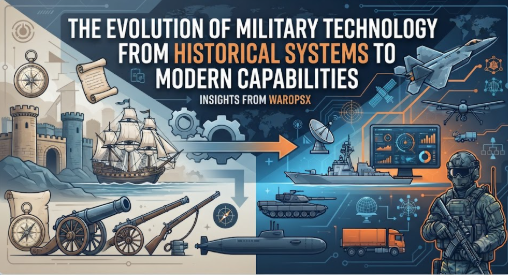
Traditional and Modern Defense Concepts
| Defense Concept | Traditional Understanding | Modern Development | Key Learning Point |
| Logistics | Physical transport of ammunition and rations | Global supply chain management and predictive maintenance | Logistics underpins all modern operational readiness |
| Command and Control | Hierarchical radio communication and paper maps | Digital data networks and automated decision-support tools | Information speed dictates command responsiveness |
| Defense Platforms | Standalone mechanical vehicles and weapons | Interconnected digital systems integrated across multiple domains | Technology requires organizational and network integration |
| Intelligence (ISR) | Manual reconnaissance reporting and photographic analysis | Automated sensor feeds, AI-assisted data filtering, and continuous monitoring | Data volume requires advanced analytical frameworks |
Frequently Asked Questions
What does WarOpsX focus on educationally?
WarOpsX focuses on providing structured educational resources covering military strategy, defense studies, logistics, command systems, organizational structures, history, and emerging defense technologies. The platform aims to help students and researchers understand how these complex elements interconnect within modern defense environments without emphasizing tactical combat instruction.
How does military strategy relate to military operations?
Military strategy establishes the overarching long-term objectives and resource allocations required to achieve security goals. Military operations act as the practical translation of that strategy, involving the planning, synchronization, and coordination required to execute activities and achieve specific operational objectives.
Why is military logistics considered essential in defense studies?
Military logistics encompasses supply chains, transportation, maintenance, and resource sustainment. It is vital because no strategy or technology can succeed over time without the continuous administrative and material support required to keep an organization equipped and operational.
What are command and control systems?
Command and control systems comprise the personnel, procedures, equipment, and communication networks that leaders use to exercise authority and direct activities. They facilitate information flow, maintain situational awareness, and ensure clear communication across organizational hierarchies.
What topics are included under defense technology?
Defense technology covers artificial intelligence, autonomous systems, advanced sensors, secure communications, simulation tools, cyber capabilities, and data analysis systems. These innovations influence how defense organizations communicate, gather information, and manage readiness.
How does military history contribute to defense education?
Military history provides essential context by examining past campaigns, institutional reforms, and strategic shifts. Studying history helps learners identify recurring patterns in leadership, logistical challenges, and organizational adaptation that remain relevant to modern security environments.
What is meant by multidomain operations?
Multidomain operations refer to the coordination and synchronization of activities across land, maritime, air, space, cyber, and information domains. This concept highlights how modern security environments require seamless interaction across multiple physical and virtual realms.
What is the role of Intelligence Surveillance and Reconnaissance (ISR)?
ISR involves collecting data through sensors and observation, analyzing that information, and monitoring environments to maintain situational awareness. It supports informed decision-making by reducing uncertainty and providing critical insights to leaders.
Who is the intended audience for WarOpsX?
The platform is designed for students, researchers, defense enthusiasts, policy learners, and professionals seeking structured, educational insights into military strategy, defense studies, organizational models, and modern security concepts.
Why is it important to study these defense areas together?
Studying defense areas together rather than in isolation provides a holistic view of how institutions function. Understanding the connections between strategy, logistics, technology, and leadership helps learners grasp the true complexity of modern defense and security systems.
Conclusion
Understanding modern defense systems requires looking beyond isolated components to examine how strategy, operations, logistics, technology, and organizational structures interact. Educational resources like WarOpsX provide a structured path for exploring these complex subjects, helping learners connect historical developments with contemporary security concepts.
Whether studying military strategy, defense studies, logistics, command systems, or multidomain operations, a comprehensive approach fosters a deeper appreciation of the institutional realities that govern global defense. By examining these interconnected domains through clear, educational content, readers can build a solid foundation for ongoing research, academic study, and professional development in the field of defense and strategic education.
Leave a Reply