How to Research Fertility Treatments, Costs, and Clinic Options
Introduction
Starting to research fertility care can feel overwhelming. People often find themselves facing unfamiliar medical words, unclear price sheets, and complex clinic data. Many wonder which treatments exist, how much care actually costs, how to interpret clinic claims, and whether staying close to home or traveling makes the most sense.
IVFHospitalsNow.com is an independent educational and provider-discovery website built to help answer these common questions. Rather than offering medical services, the site gathers practical fertility information in one central place. It allows individuals and couples to learn about different medical approaches, review clinic details, and look into care at home or overseas.
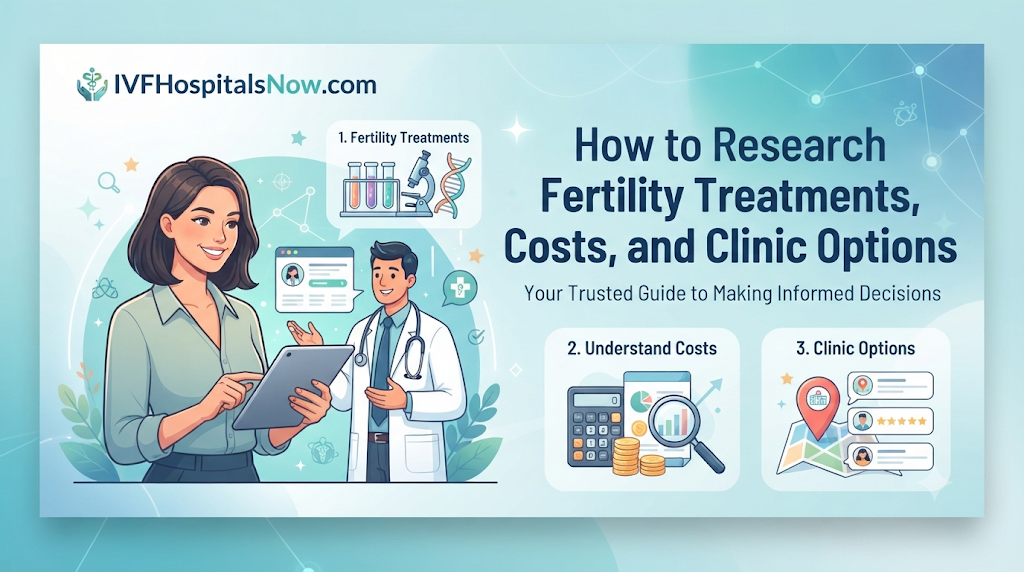
This guide explains how IVFHospitalsNow.com works, what topics it covers, and how you can use its educational tools to research fertility treatment options before having detailed conversations with your doctor.
What Is IVFHospitalsNow.com?
IVFHospitalsNow.com is an independent platform that focuses on fertility education and provider research. It is not a hospital, a medical practice, or an agency that books appointments. Its main purpose is to bring together scattered details about reproductive health so the public can read and compare them clearly.
Fertility details are often hard to evaluate because different clinics describe their services, laboratory technology, and pricing structures in very different ways. IVFHospitalsNow.com helps bridge this gap by presenting educational explanations alongside organized directory information.
By using the platform, individuals can learn the basics of various procedures, review how clinic statistics are compiled, and gather notes. This helps patients walk into medical consultations feeling informed, prepared, and ready to ask meaningful questions.
Who Can Use the Platform?
The information on IVFHospitalsNow.com is designed for anyone wanting a clearer understanding of reproductive care:
- Individuals and couples who are just beginning to look into reproductive medicine.
- People who want to understand the difference between basic treatments and advanced lab procedures.
- Those seeking to balance local care with out-of-town or international choices.
- Individuals interested in fertility preservation, such as freezing eggs or sperm for personal or medical reasons.
- Patients trying to map out a clear budget for multi-step procedures.
- Friends or family members who want to understand the medical process so they can offer practical support.
What Information Can Users Research?
The platform covers a broad range of reproductive topics and logistical details. Users can explore:
- Clinical Procedures: Step-by-step descriptions of In Vitro Fertilization (IVF), Intrauterine Insemination (IUI), and specialized lab techniques like Intracytoplasmic Sperm Injection (ICSI).
- Fertility Preservation: Practical guides that break down the egg freezing cost, storage considerations, and cycle expectations.
- Diagnostic Testing: Details on hormone panels, semen analysis, ultrasound tracking, and ovarian reserve checks.
- Underlying Conditions: General overviews of common health factors, including polycystic ovary syndrome (PCOS), endometriosis, and male-factor concerns.
- Facility Profiles: General information on local practices and international hospitals, outlining available technologies, accreditations, and patient support services.
- Regional Differences: Clear overviews explaining why treatment guidelines and costs differ from one territory to another.
Understanding Fertility Treatment Information
Every patient’s reproductive health is unique, which is why clinics offer a variety of procedures. On IVFHospitalsNow.com, readers can explore how different methods work in straightforward terms.
For example, IUI is a lower-intensity procedure where prepared sperm is placed directly into the uterus around the time of ovulation. In contrast, IVF is a multi-step process where eggs are collected from the ovaries, fertilized with sperm in a specialized laboratory, and monitored as embryos develop before one is transferred back into the uterus.
When reading about laboratory techniques, many people look into ICSI vs IVF to understand how fertilization takes place. In conventional IVF, thousands of sperm are placed near an egg in a dish, and fertilization happens naturally. In ICSI, an embryologist carefully selects a single sperm and injects it directly into an egg. This method is often discussed when male-factor concerns are present.
The site also covers egg freezing, which allows someone to collect and freeze unfertilized eggs for later use. Because each option involves different medications, lab procedures, and physical demands, medical specialists determine which pathway is suitable based on clinical testing.
Understanding Treatment Cost and Success Information
Evaluating the financial and clinical data of reproductive medicine requires looking past basic headline numbers.
The total IVF treatment cost is rarely a single flat fee. A full treatment cycle usually includes several distinct components:
- Initial doctor visits and diagnostic blood tests
- Ultrasound monitoring visits
- Daily stimulation medications
- The egg collection procedure and anesthesia
- Embryology laboratory services (such as ICSI or embryo freezing)
- Embryo storage fees
- The eventual embryo transfer procedure
When reviewing IVF success rates, context is critical. A single percentage never tells the whole story. Published success figures depend heavily on patient age, previous medical history, the specific cause of infertility, and whether fresh or frozen embryos were used.
Furthermore, clinics may report outcomes differently—some share the positive pregnancy test rate, while others report clinical pregnancies confirmed by ultrasound, or live birth rates per started cycle. IVFHospitalsNow.com helps readers understand these definitions so they can interpret published statistics with realistic expectations.
Researching Fertility Providers
Finding the right clinic involves looking at several practical and medical details. Patients often begin their search by reviewing established IVF clinics to see what technologies and services they offer.
Many people start by looking for IVF clinics near me because fertility treatments require frequent clinic visits for blood draws and morning ultrasound monitoring. Having a facility close to home or work can reduce everyday travel stress.
However, location is only one factor to weigh. It is equally helpful to compare IVF clinics using a wider set of criteria:
- The experience of the medical and embryology teams
- On-site laboratory accreditations and equipment
- Communication style, patient counseling, and nursing support
- Clarity and transparency in written price estimates
- Policies regarding weekend monitoring or emergency questions
Looking at all these factors together gives a much more complete picture than simply choosing the nearest office or the lowest advertised price.
Researching Fertility Care in Other Countries
Traveling for medical care has become a common consideration for many individuals and couples. Reading about IVF treatment abroad can help patients understand how care is delivered outside their home region.
A major reason people explore this path is the difference in IVF cost by country. Medical fees, laboratory operating expenses, medication prices, and regional regulations vary significantly across borders. What costs a substantial amount in one country may be offered at a lower price point elsewhere simply due to local healthcare economics.
However, international care introduces extra variables that must be planned for carefully:
- Legal Regulations: Rules regarding donor anonymity, embryo testing, and age limits differ by country.
- Travel and Housing: Flights, hotel stays, and living expenses over two to three weeks add to the total budget.
- Time Away: Extended time away from work and family commitments is often necessary.
- Language and Records: Medical records must be translated accurately, and clear communication with the care team is essential.
- Care After Returning: Patients need a local physician at home who agrees to handle follow-up blood work, pregnancy scans, or unexpected complications.
Five-Step Research Process
Using a structured research process helps you stay organized when gathering details:
- Identify What You Need to Know: Define your immediate questions. Are you looking into basic diagnostic tests, specific lab procedures, local facilities, or preservation options?
- Learn About the Treatment: Read plain-language summaries of the procedures to understand the steps, timeline, and standard medical terms.
- Research Providers: Look through clinic profiles to learn about their medical staff, available laboratory services, and general practice focus.
- Compare Important Details: Review multiple clinics side by side, paying close attention to what their fee quotes include, their communication practices, and patient support options.
- Prepare Questions for a Healthcare Professional: Write down your notes and unresolved questions so you can review them directly with a certified fertility specialist.
Common Mistakes to Avoid
When looking through fertility information online, try to avoid these frequent missteps:
- Focusing Only on Base Quotes: Assuming the lowest advertised price covers the entire cycle, while forgetting to ask about medications, testing, and storage fees.
- Taking Success Numbers at Face Value: Viewing a single percentage figure without checking the patient age group or whether it measures positive tests versus live births.
- Relying Only on Driving Distance: Picking a provider solely because it is a short drive away, without reviewing its laboratory standards or specific treatment experience.
- Assuming Every Treatment Is the Same: Treating standard IVF and ICSI as identical procedures with the same medical indications.
- Overlooking Travel Logistics: Planning for overseas care based on treatment price alone, while forgetting travel costs, time off work, and follow-up care back home.
- Treating Online Guides as Medical Advice: Using web directories to self-diagnose rather than using the facts to prepare for a discussion with a qualified doctor.
Real-Life Example
Consider the hypothetical example of David and Elena, a couple who have spent a year trying to conceive without success. Unsure of what to do next, they begin searching the internet but quickly feel confused by complex medical terms and promotional clinic advertisements.
Using IVFHospitalsNow.com, they start by reading educational overviews of initial fertility testing to understand what a basic workup involves. They learn about the difference between standard fertilization in a dish and ICSI.
Next, they look at several clinic profiles in their region. Instead of looking only at distance, they check which practices provide transparent pricing breakdowns and on-site laboratory details. They also read about international clinics to understand how care abroad compares with staying local.
With their research organized, David and Elena compile a list of specific questions:
- Which initial diagnostic tests do we both need?
- Does our medical profile suggest conventional IVF or ICSI?
- Can you provide an itemized list of cycle fees, including medications and embryo storage?
When they arrive at their first specialist consultation, they feel calm and informed, ready to participate actively in their medical plan.
Research and Comparison Reference
Table 1: Provider Evaluation Checklist
| Research Area | What to Review | Key Questions to Note |
| Clinical Services | Procedures offered (IUI, IVF, ICSI, freezing) | Does the team handle your specific medical area? |
| Laboratory Standards | On-site embryology technology and accreditation | Is the lab accredited by recognized health bodies? |
| Pricing Transparency | Itemized quotes versus single package rates | Are medications, monitoring, and storage included? |
| Success Reporting | Data broken down by age and transfer type | Does the data reflect live births or positive tests? |
| Location & Access | Distance for frequent morning monitoring visits | Can routine blood tests be done near your home? |
| Follow-Up Support | Access to nursing staff and emergency contact | Who answers urgent questions outside clinic hours? |
Table 2: Treatment Cost Considerations
| Treatment Component | Typical Inclusions | Important Details to Verify |
| Diagnostic Workup | Blood panels, ultrasounds, semen analysis | Often billed separately before treatment begins |
| Medications | Ovarian stimulation drugs, trigger injections | Varies widely based on individual dosage needs |
| Laboratory Work | Egg retrieval, fertilization, embryo culture | Inquire whether ICSI incurs an additional charge |
| Cryopreservation | Freezing of extra embryos, eggs, or sperm | Check how many months or years of storage are covered |
| Transfer Cycle | Thawing and preparation for embryo transfer | Verify if frozen transfers are billed separately |
Frequently Asked Questions (FAQs)
1. What is IVFHospitalsNow.com?
It is an independent educational and discovery platform that provides clear information on fertility treatments, clinics, costs, and country-specific care options. It is not a medical practice.
2. What information can I research on IVFHospitalsNow.com?
You can learn about procedures like IVF, ICSI, IUI, and egg freezing, as well as clinic options, pricing structures, and diagnostic testing.
3. How can I research fertility clinics effectively?
Look beyond promotional claims by examining the experience of the clinical team, laboratory standards, price transparency, and how easily you can travel to the facility for morning visits.
4. What factors can affect total treatment expenses?
Total expenses depend on required medications, diagnostic testing, specialized laboratory services such as ICSI, anesthesia fees, and ongoing embryo storage costs.
5. How should success rates be understood?
Success figures must be viewed in context. Patient age, health history, cause of infertility, and how the clinic defines success (positive pregnancy test versus live birth) all influence the final numbers.
6. What should I check when comparing different clinics?
Compare what is included in their quoted prices, the accreditations of their embryology laboratories, their communication practices, and how they coordinate patient support.
7. Why should I consider travel time when looking at local clinics?
During an active cycle, you may need to visit the clinic every few days for blood work and ultrasounds. A convenient location helps reduce daily disruption and stress.
8. What should I check before planning treatment in another country?
Make sure you understand local medical laws, travel and hotel expenses, language arrangements, and whether a doctor at home will oversee your follow-up care once you return.
9. Why do treatment expenses differ from country to country?
Costs vary worldwide due to differences in local healthcare systems, living expenses, medication manufacturing, laboratory operating costs, and government rules.
10. What is the basic difference between standard IVF and ICSI?
In conventional IVF, sperm and eggs are placed together in a laboratory dish to fertilize naturally. In ICSI, an embryologist injects a single selected sperm directly into an egg.
Conclusion
Navigating fertility care requires reliable information, clear realistic expectations, and organized planning. Online tools like IVFHospitalsNow.com serve as a helpful starting point, giving patients a space to study different treatment methods, review clinic profiles, and understand the factors behind costs and reported outcomes.
By gathering clear facts and learning how the medical process works, individuals and couples can approach their care with confidence. Online research provides the knowledge needed to build an organized list of questions, ensuring that discussions with certified reproductive endocrinologists and doctors are focused, detailed, and directly suited to your personal health needs.
Leave a Reply