How Modern Teams Build Fast Reliable Data Pipelines That Work
Introduction
Many growing businesses struggle to keep up with incoming information. Data arrives from web apps, customer support tools, and payment systems every single second. Moving this information into an analytics dashboard often requires tedious manual work.
When engineers build systems by hand, things break easily. Tables fail to update, incoming records get corrupted, and dashboards display old numbers. These unexpected disruptions ruin trust in business reports.
Modern teams solve these problems by changing how they handle data pipelines. Instead of relying on guesswork, they use structured practices borrowed from software development. This operational mindset helps engineering teams automate repetitive tasks and catch errors early. Readers looking to explore these concepts further often study resources provided by TheDataOps.org to understand how reliable information systems operate.
The Core Meaning of DataOps
DataOps combines data engineering, automated testing, and agile collaboration into one unified workflow. Think of a data pipeline like a water supply system. If a pipe bursts or dirty water enters the line, everyone downstream receives contaminated water.
Traditional data management often waits until the water reaches the end user to check its quality. By then, the damage is already done.
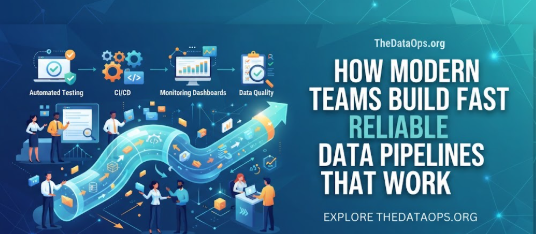
DataOps places smart testing valves all along the pipeline. It checks incoming information right at the source, tests it during transformation, and monitors delivery continuously. This ensures that clean, reliable information flows smoothly to every business dashboard without manual intervention.
Why Modern Organizations Need Data Operations
Reliable information drives smart business decisions. Organizations adopt modern data operations for several key reasons:
- Faster Delivery: Automated workflows move information from source systems to analytics databases in minutes instead of days.
- Fewer Manual Tasks: Automation handles repetitive copying and scheduling, freeing engineers to build better features.
- Early Error Detection: Automated tests catch broken data formats before corrupted records reach production reports.
- Better Collaboration: Engineering, analytics, and business teams work together using shared, transparent processes.
- Reliable Scaling: Well-structured systems handle growing volumes of information without slowing down or crashing.
Essential DataOps Training Concepts
Developing practical skills requires understanding how different parts of a data ecosystem work together. Comprehensive DataOps Training typically covers a wide range of foundational and advanced topics:
- Data Pipeline Concepts: Learning how raw information moves from source databases to destination warehouses.
- Agile Methodologies: Breaking large data projects into small, manageable tasks that teams can deliver quickly.
- Continuous Integration and Delivery (CI/CD): Automatically testing and deploying pipeline updates safely.
- Workflow Orchestration: Managing the exact schedule and order of data tasks.
- Cloud Infrastructure: Running scalable data jobs on modern cloud platforms.
- Observability and Monitoring: Tracking the health and freshness of incoming data streams.
TheDataOps.org offers structured educational guides that help learners explore these core engineering concepts step by step.
Validating Skills Through DataOps Certification
Professionals often want to prove their expertise to employers and peers. Earning a DataOps Certification helps individuals demonstrate a solid understanding of modern data pipelines, automation frameworks, and testing practices.
An effective certification journey focuses on practical problem-solving rather than just memorizing definitions. Learners study how to design fault-tolerant pipelines, manage cloud resources, and maintain high standards of data quality. While a certificate cannot guarantee a specific job title, it serves as a helpful milestone for engineers looking to validate their technical capabilities.
Following a Structured DataOps Course
Mastering data operations is easier when learning follows a logical path. A well-designed DataOps Course guides students from basic fundamentals to advanced production environments.
Learners typically start by exploring simple file transfers and database queries. Next, they move on to pipeline automation, automated testing frameworks, and cloud orchestration tools. Finishing with monitoring and security practices ensures that students understand how to maintain stable data systems in real-world workplaces.
Working With Popular DataOps Tools
Managing data infrastructure requires specialized software. Different tools handle different stages of the data lifecycle. Understanding what each tool does helps engineering teams choose the right solution for their projects.
Orchestration and Processing Tools
Orchestration tools act like conductors in an orchestra. They ensure every data task runs in the correct sequence.
- Apache Airflow: Manages complex workflows by scheduling and monitoring data tasks through code.
- Apache Kafka: Streams large volumes of real-time data continuously between systems.
- Apache Spark: Processes massive datasets quickly across distributed computer clusters.
- Kubernetes: Manages containerized applications, making it easy to scale data workloads up or down.
Delivery and Monitoring Tools
Once data is processed, teams need automation and visibility tools to keep systems running smoothly.
- Jenkins: Automates building, testing, and deploying pipeline code changes.
- Grafana: Displays system health metrics, pipeline speeds, and error rates on visual dashboards.
- Python: Provides a flexible programming language used to write custom transformation scripts and automation tasks.
Implementing a Unified DataOps Platform
A DataOps Platform brings disparate data tasks into a single, cohesive environment. Instead of using separate tools for ingestion, transformation, testing, and monitoring, a platform integrates these steps into one seamless workflow.
This integration reduces friction between engineering and analytics teams. When data ingestion, automated quality checks, and scheduling live in the same ecosystem, troubleshooting becomes much faster. Engineers can trace an error from the final dashboard all the way back to the original source table in minutes.
Automating Workflows Through Data Pipeline Automation
Manual data updates consume valuable engineering hours. Data Pipeline Automation replaces human intervention with code-driven schedules and triggers.
For example, consider an online store that collects daily sales numbers. In a manual setup, an engineer must log in every morning, run a script, and check if the tables loaded correctly.
With pipeline automation, a trigger detects when new sales files arrive, runs transformation scripts, executes data quality tests, and updates the reporting database automatically. If an error occurs, the system sends an immediate alert to the engineering team.
Understanding Data Observability
Knowing whether a pipeline script ran successfully is no longer enough. Data Observability provides deep visibility into the actual health, freshness, and behavior of data systems.
Traditional monitoring tells engineers if a server is running. Observability tells them if the incoming data makes sense.
It tracks whether expected row counts arrived on time, detects sudden shifts in data values, and flags missing columns before downstream reports break. This proactive approach helps teams catch subtle data anomalies before business users notice them.
Maintaining Standards With Data Quality Management
Bad input leads to incorrect business decisions. Data Quality Management establishes strict rules and validation checks to keep information accurate, complete, and consistent.
Teams define rules for their data sets. For instance, a customer age field must always be a positive number, and an email address must contain an “@” symbol.
Automated tests run against these rules every time a pipeline executes. If records fail validation, the system quarantines the bad data and notifies the responsible engineer, protecting the integrity of downstream analytics.
The Role of a DataOps Engineer
A DataOps Engineer designs, builds, and maintains the automated infrastructure that moves and tests company information. Their daily responsibilities bridge the gap between software development and data analytics.
Key tasks include:
- Writing robust data ingestion and transformation scripts using Python and SQL.
- Setting up CI/CD pipelines to deploy code changes safely.
- Configuring automated testing frameworks to validate data quality.
- Monitoring pipeline performance and resolving bottlenecks.
- Collaborating with data scientists and analysts to ensure they get clean, timely information.
How DataOps Works in Practice
Modern data operations follow a structured lifecycle from raw ingestion to final business reporting.
- Ingestion: Raw information is collected from various source systems, such as mobile apps and payment gateways.
- Transformation: Data is cleaned, filtered, and structured into usable tables.
- Validation: Automated rules test the transformed records for accuracy and completeness.
- Orchestration: Workflow tools schedule and execute each processing step in the correct order.
- Deployment: Clean data is loaded into enterprise data warehouses for business users.
- Observability: Continuous monitoring tracks pipeline speed, freshness, and error rates.
Practical DataOps Example
Imagine a busy ride-sharing company that collects trip logs from thousands of drivers every hour.
In the past, raw logs piled up in cloud storage, and analysts struggled to run queries because the files were disorganized and full of duplicate entries.
By adopting DataOps practices, the engineering team builds an automated pipeline. When new trip logs arrive, an orchestration tool triggers a cleaning script.
Automated tests check that trip durations and fare amounts contain realistic numbers. Once validation passes, the data loads into an analytics database, and a monitoring tool confirms that the morning reports are ready for the operations team before employees start their workday.
Real-World Use Cases Across Industries
Reliable data operations support decision-making across many different sectors:
- E-commerce: Tracking inventory levels in real time to prevent stockouts during high-traffic sales events.
- Banking: Validating transaction records instantly to detect fraudulent activity and meet regulatory reporting standards.
- Healthcare: Integrating patient records securely across hospital departments while maintaining strict data governance.
- Manufacturing: Monitoring sensor data from factory equipment to predict when machinery needs maintenance.
Major Benefits of Modern Data Operations
Adopting structured data workflows brings significant operational advantages to technical teams:
- Greater Reliability: Automated testing and monitoring reduce unexpected pipeline failures and corrupted reports.
- Increased Productivity: Eliminating manual data wrangling allows engineers to focus on high-value analytics projects.
- Better Decision-Making: Business leaders gain confidence when dashboards consistently display accurate, up-to-date numbers.
- Scalable Growth: Standardized automation frameworks make it easy to incorporate new data sources as the business expands.
Common DataOps Challenges
Implementing modern data operations is not without hurdles. Organizations frequently encounter several common obstacles:
- Tool Overload: Adopting too many software tools without a clear strategy creates unnecessary complexity.
- Legacy Systems: Connecting modern automation platforms to older, rigid databases requires careful planning.
- Cultural Resistance: Teams accustomed to manual processes may hesitate to adopt new collaborative workflows.
- Skill Gaps: Engineers may need time to learn new orchestration, testing, and observability practices.
Common Mistakes to Avoid
Avoiding typical missteps helps teams build more stable data environments:
- Automating Broken Workflows: Automating a poorly designed manual process only helps bad data move faster.
- Ignoring Data Quality: Focusing solely on pipeline speed while neglecting data validation leads to inaccurate reports.
- Testing Only Code: Forgetting to test the actual data values passing through the pipeline leaves systems vulnerable to corruption.
- Neglecting Documentation: Failing to document pipeline workflows makes troubleshooting difficult when engineers leave the team.
Best Practices for Successful Implementation
Following established guidelines helps engineering teams maximize the value of their data operations:
- Test Early and Often: Run validation checks as close to the data source as possible.
- Keep Pipelines Observable: Set up automated alerts for pipeline delays, missing tables, and validation failures.
- Use Version Control: Track all pipeline code and configuration changes in a repository like Git.
- Define Clear Ownership: Make specific team members responsible for maintaining critical data assets.
- Improve Continuously: Review pipeline failures regularly to refine testing rules and automation scripts.
Security and Governance in Data Operations
Handling enterprise information requires strict adherence to security and compliance standards. Modern data operations must incorporate robust protection measures:
- Access Control: Restrict database and pipeline access using principle-of-least-privilege permissions.
- Data Privacy: Mask or encrypt sensitive customer information during ingestion and transformation.
- Auditability: Maintain clear logs showing who modified pipeline code and when data tables were updated.
- Secure Storage: Ensure cloud data warehouses meet industry security compliance frameworks.
Supporting Modern AI and Analytics With DataOps
Artificial intelligence models and advanced machine learning algorithms depend entirely on clean, high-quality input. If training data is flawed or outdated, AI predictions will be inaccurate.
DataOps provides the reproducibility and automation needed to feed reliable information into machine learning pipelines. Automated testing ensures that feature stores receive clean data, while observability tools track model input drift over time, helping data scientists maintain high-performing AI applications.
Career Learning and Skill Development
Building a successful career in data operations requires a strong foundation in both software engineering and data management. Professionals often study core skills such as Python programming, SQL querying, Linux administration, cloud platforms, and CI/CD automation.
Engaging with educational platforms like TheDataOps.org helps learners explore tutorials, architectural guidance, and training resources designed to support modern data engineering careers.
Who Can Benefit From TheDataOps.org?
Beginners
New learners can explore fundamental concepts, terminology, and introductory guides to understand how data pipelines operate.
Data Engineers
Experienced engineers can discover advanced automation techniques, testing frameworks, and workflow optimization strategies.
DataOps Engineers
Technical professionals can find practical resources, tool overviews, and architectural best practices to improve enterprise data operations.
DevOps Professionals
Software operations specialists can learn how traditional CI/CD and infrastructure automation principles apply specifically to data workflows.
Analytics Professionals
Business analysts and data scientists can understand how data quality management and observability ensure reliable reporting.
Organizations
Engineering leaders and teams can research modern practices to improve the speed, reliability, and governance of their data environments.
How to Use TheDataOps.org for Learning
Learners looking to build structured knowledge can follow a progressive learning path:
- Understand fundamental DataOps principles and terminology.
- Explore core data pipeline architecture and ingestion methods.
- Study workflow automation and CI/CD practices.
- Learn automated testing and data validation techniques.
- Explore orchestration tools like Apache Airflow.
- Understand data observability and continuous monitoring.
- Study data quality management and governance standards.
- Practice building reliable workflows with modern cloud tools.
Technical Comparison of Data Operations Areas
| DataOps Area | Main Purpose | Example Tools |
| Orchestration | Manage workflow tasks and schedules | Apache Airflow |
| Streaming | Move real-time data continuously | Kafka |
| Processing | Handle large-scale data transformations | Spark |
| Monitoring | Track system health and performance | Grafana |
| Automation | Automate code delivery and deployment | Jenkins |
FAQ
What is DataOps?
DataOps is an automated, collaborative approach to data management that combines data engineering, testing, and continuous delivery to improve the speed and reliability of data pipelines.
Why is DataOps important for businesses?
It reduces manual errors, catches corrupted data early, accelerates pipeline delivery, and ensures that business leaders make decisions using accurate information.
What does DataOps Training teach?
Training programs cover data pipeline design, agile methodologies, CI/CD automation, workflow orchestration, cloud infrastructure, and data observability.
Is DataOps Certification useful for professionals?
Yes, certification helps professionals validate their expertise in modern data operations and demonstrates a structured understanding of pipeline automation.
What topics are covered in a DataOps Course?
Courses typically move from basic data concepts to advanced production topics, including automated testing, cloud deployment, and system monitoring.
What are common DataOps Tools?
Common tools include Apache Airflow for orchestration, Kafka for data streaming, Spark for large-scale processing, Jenkins for automation, and Grafana for monitoring.
What does a DataOps Platform do?
A DataOps platform integrates data ingestion, transformation, testing, orchestration, and monitoring into a single unified environment.
What is Data Observability?
Data observability is the ability to monitor the health, freshness, and quality of data as it moves through pipelines, helping teams detect anomalies quickly.
Why is Data Quality Management important?
It establishes automated validation rules that prevent inaccurate or incomplete records from corrupting downstream business analytics.
What does a DataOps Engineer do?
A DataOps engineer builds automated data workflows, manages orchestration tools, implements testing frameworks, and maintains reliable cloud data infrastructure.
Final Thought
Managing enterprise information effectively requires more than just writing basic scripts. Modern organizations need robust automation, continuous testing, and deep observability to keep their data pipelines running smoothly.
By combining software engineering best practices with dedicated data operations strategies, teams can eliminate tedious manual tasks and deliver reliable insights. Resources like TheDataOps.org provide valuable educational content for professionals seeking to understand and implement these modern data practices.
Leave a Reply