SaaS Development at Cotocus: A Practical Strategy for Managing Product Growth
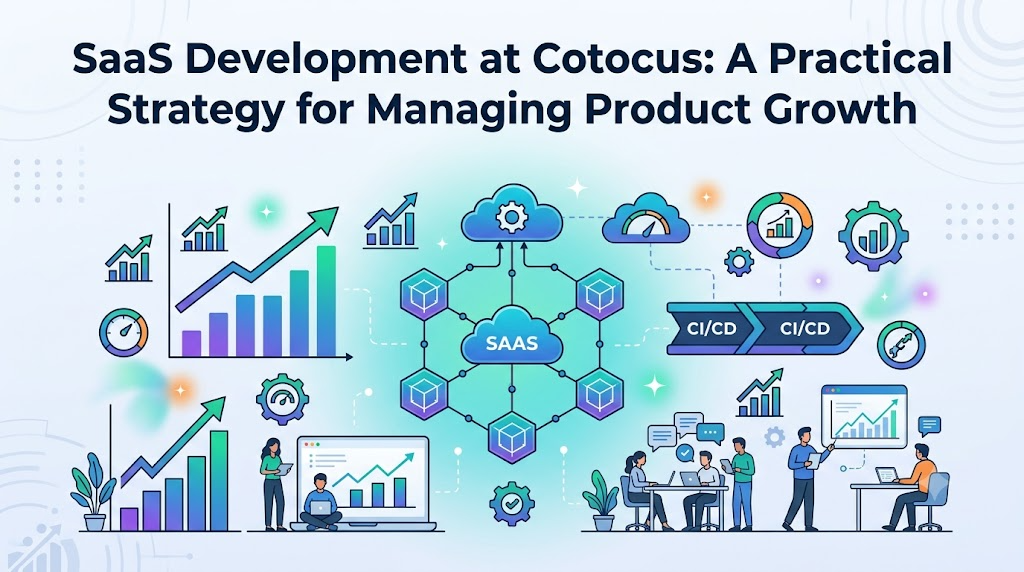
In recent years, the intersection of artificial intelligence, cloud computing, and modern software engineering has transformed how organizations build and scale digital products. Businesses today require not just functional applications, but robust systems that can handle immense data volumes, ensure high availability, and securely integrate intelligent automation. Meeting these demands involves coordinating multiple technical disciplines—from custom full-stack software development and SaaS product architecture to cloud migration and rigorous site reliability engineering.
Understanding these technical domains is essential for organizations seeking sustainable digital growth. This article explores the core concepts of modern software development, enterprise AI integration, cloud-native infrastructure, and DevOps practices, utilizing the technology service areas covered by Cotocus.in to provide practical, real-world context.
What Is Cotocus.in?
Cotocus.in is a technology service platform that focuses on digital engineering, enterprise software development, cloud infrastructure, and artificial intelligence solutions. Rather than operating as a traditional vendor, the website represents a specialized technology framework designed to support startups, enterprises, and digital-first organizations through complex technical transformations.
The scope of services and topics represented across Cotocus.in spans several critical technology pillars:
- AI Software Development: Building intelligent applications, LLM-driven workflows, and automated enterprise systems.
- Generative AI Development Services: Implementing large language models, retrieval-augmented generation (RAG), and data validation frameworks.
- AI Agent Development Services: Deploying goal-oriented software agents capable of executing autonomous workflows and decision support.
- Custom Software Development: Designing scalable web applications, secure APIs, and robust microservices architectures.
- SaaS Product Development Services: Engineering multi-tenant software products from MVP to enterprise-grade production environments.
- DevOps Consulting Services India: Establishing CI/CD pipelines, infrastructure as code, and advanced observability practices.
- Cloud Migration Services India: Modernizing legacy applications across AWS, Microsoft Azure, and Google Cloud.
- Kubernetes Consulting Services: Managing containerized workloads, cluster scaling, and resilient cloud-native networking.
- Mobile App Development Company India: Delivering high-performance iOS, Android, and cross-platform mobile solutions.
- Corporate AI and DevOps Training: Equipping internal technical teams with practical skills in cloud engineering, AI implementation, and modern software reliability.
By examining these areas, organizations can better understand how to architect, secure, and scale modern digital products.
What Technology Areas Does Cotocus.in Cover?
Modern technology ecosystems are rarely built on a single tool or platform. Instead, they rely on a coordinated stack of software engineering disciplines, infrastructure management practices, and intelligent automation systems. The technical focus areas covered by Cotocus.in reflect this multi-disciplinary reality.
At the application layer, the platform addresses custom software development and mobile application engineering, ensuring that user-facing interfaces connect reliably with secure backend APIs. For product-driven businesses, SaaS product development services provide the structural foundation needed for multi-tenant isolation, authorization management, and database scalability.
At the infrastructure and operations layer, the focus shifts toward cloud migration, Kubernetes orchestration, and DevOps methodologies. Organizations often struggle to transition from legacy hardware to modern cloud environments such as AWS, Azure, or Google Cloud. By utilizing structured migration frameworks and container orchestration, businesses can achieve higher operational resilience. Furthermore, the integration of Corporate AI and DevOps Training ensures that internal engineering teams maintain the continuous skill development required to operate these sophisticated systems safely and efficiently.
Understanding Generative AI Development
Generative artificial intelligence has moved beyond experimental prototypes into core enterprise architecture. However, successfully implementing generative AI requires a clear understanding of its underlying components, data constraints, and validation requirements.
Core Concepts in Generative AI
At its foundation, generative AI relies on Large Language Models (LLMs) trained on vast corpuses of text and code. These models can generate human-like text, summarize lengthy documents, write programming code, and analyze unstructured data. However, standard LLMs have limitations, including static training data and a lack of access to private company records.
To overcome these limitations, modern architectures utilize Retrieval-Augmented Generation (RAG). RAG systems combine an LLM with an external vector database containing organization-specific documents. When a user asks a question, the system retrieves relevant internal documents, injects them into the prompt context, and allows the LLM to generate an accurate, verified answer based strictly on private data.
Enterprise Considerations
Implementing generative AI within enterprise environments involves several critical technical considerations:
- Data Privacy: Ensuring that proprietary company data is not leaked or used to retrain public models without authorization.
- Accuracy and Validation: Mitigating hallucinations through rigorous prompt engineering, output validation, and fallback mechanisms.
- Human Oversight: Establishing review loops where critical automated decisions or content generations are verified by human operators.
- Integration Security: Connecting AI models safely to internal REST APIs and enterprise software systems.
Organizations looking to navigate these complexities often explore specialized Generative AI Development Services to build secure, context-aware LLM and RAG architectures tailored to their operational needs.
What Are AI Agents and How Can Businesses Use Them?
While traditional chatbots follow rigid decision trees or respond to single prompts, AI agents represent a significant evolution in autonomous software systems. An AI agent is a software entity driven by an LLM that can perceive its environment, formulate multi-step plans, utilize external tools, and execute complex workflows with minimal human intervention.
How AI Agents Differ from Basic Automation
Basic automation scripts follow strict, hardcoded rules: if condition A occurs, execute action B. Traditional chatbots provide pre-written responses based on keyword matching. In contrast, AI agents possess reasoning capabilities. Given a high-level goal—such as “analyze incoming support tickets, categorize them by urgency, query the database for user subscription details, and draft an appropriate response”—an AI agent can:
- Break the task down into sequential sub-tasks.
- Decide which external tools or APIs to call (e.g., Jira, SQL databases, email services).
- Evaluate the output of each tool step.
- Adjust its plan if an error occurs before presenting the final result for human approval.
Business Applications and Limitations
AI agents are valuable for internal productivity, data synthesis, and complex workflow execution. However, they are not suitable for every business process. Because LLMs can occasionally misinterpret instructions or suffer from cascading errors in multi-step loops, AI agents require strict guardrails, secure API permissions, and mandatory human-in-the-loop validation checkpoints for sensitive actions such as financial transactions or data deletion.
When organizations require sophisticated workflow automation, exploring AI Agent Development Services helps ensure that agents are built with robust monitoring, clear operational boundaries, and secure execution environments.
Custom Software Development and Modern Application Architecture
Off-the-shelf software solutions often fail to meet the unique operational requirements of growing enterprises. When standard platforms create workflow bottlenecks, businesses turn to custom software engineering to build tailored web applications, microservices, and enterprise platforms.
The Role of Custom Software Architecture
Designing custom software involves establishing a clean separation of concerns between the frontend user interface, backend business logic, and database storage layers. Modern applications are frequently built using microservices architectures, where individual features operate as independent services communicating via lightweight APIs or message brokers. This modularity allows teams to update, scale, and secure specific parts of an application without redeploying the entire system.
Key Engineering Practices
To ensure long-term maintainability and high performance, custom software development must prioritize several architectural pillars:
- Scalability: Designing database indexing, caching layers (such as Redis), and horizontal server scaling to handle traffic spikes smoothly.
- Security: Implementing secure authentication protocols (such as OAuth 2.0 and JWT), role-based access control, and regular dependency vulnerability scanning.
- Maintainability: Writing clean, modular code supported by automated unit tests and continuous integration pipelines.
When enterprises require bespoke engineering solutions, partnering with a qualified Custom Software Development Company India ensures that applications are built on resilient, future-proof architectural standards.
Understanding SaaS Product Development Services
Building a Software-as-a-Service (SaaS) product requires a strategic shift from traditional single-tenant application design to multi-tenant architectures where multiple customers share the same infrastructure while maintaining absolute data isolation.
The SaaS Product Lifecycle
Developing a successful SaaS product typically follows a structured lifecycle:
- MVP (Minimum Viable Product) Phase: Building core features quickly to test market demand with real users while keeping technical debt manageable.
- Architecture Refinement: Moving from monolithic codebases to scalable services as user adoption grows.
- Multi-Tenancy and Security: Ensuring strict data partitioning so that Tenant A cannot access Tenant B’s database records under any circumstances.
- Subscription and Billing Integration: Integrating secure payment gateways and usage metering systems.
Common SaaS Challenges
SaaS products frequently encounter challenges related to database migration, tenant noisy-neighbor problems (where one heavy user consumes shared server resources), and uptime maintenance. Addressing these challenges requires careful planning of cloud resource limits, automated database backups, and robust logging mechanisms. Leveraging professional SaaS Product Development Services helps engineering teams avoid architectural pitfalls and accelerate time-to-market.
DevOps, SRE, and Reliable Software Delivery
Writing functional code is only the first step in software engineering; delivering that code safely and reliably to production requires modern operational practices. DevOps is a cultural and technical approach that bridges the gap between software development and IT operations.
Core Pillars of DevOps and SRE
DevOps is not simply a collection of tools; it is a discipline focused on automation, collaboration, and continuous improvement. Key components include:
- CI/CD (Continuous Integration and Continuous Delivery): Automatically building, testing, and deploying code changes to staging and production environments.
- Infrastructure as Code (IaC): Managing and provisioning computing infrastructure through human-readable configuration files (using tools like Terraform) rather than manual server setup.
- Observability: Combining centralized logging, metrics collection, and distributed tracing to monitor application health in real time.
- Site Reliability Engineering (SRE): Applying software engineering principles to IT operations to build ultra-scalable and highly reliable software systems.
- DevSecOps: Integrating security checks directly into every stage of the software delivery pipeline.
Organizations seeking to eliminate deployment bottlenecks and manual errors often engage with DevOps Consulting Services India to modernize their release pipelines and infrastructure management frameworks.
Cloud Migration and Application Modernization
Moving workloads from local data centers to cloud environments is a foundational step for modern enterprises. However, cloud migration is much more than simply copying virtual machines from one server rack to another.
Migration Strategies
Organizations typically evaluate several migration paths depending on application complexity and business goals:
- Rehosting (“Lift and Shift”): Moving applications to the cloud with minimal changes. This is fast but rarely takes full advantage of cloud-native features.
- Replatforming: Making minor optimizations to allow applications to run on managed cloud services (such as managed databases) without altering core code.
- Refactoring / Modernizing: Completely rewriting legacy applications into containerized microservices designed specifically for cloud environments.
Managing Cloud Complexity
Regardless of the chosen strategy, successful cloud migration across major cloud providers like AWS, Microsoft Azure, or Google Cloud requires rigorous assessment, automated deployment, cost management controls, and continuous security monitoring. Utilizing professional Cloud Migration Services India ensures that migrations minimize downtime and optimize long-term cloud expenditure.
Why Kubernetes Matters for Cloud-Native Applications
As applications grow into complex webs of microservices, managing individual virtual servers becomes unsustainable. This is where containerization and orchestration platforms like Kubernetes become essential.
Containers and Orchestration
Containers (such as Docker) package an application together with its runtime, libraries, and dependencies, ensuring that it runs reliably across any computing environment. Kubernetes is an open-source system that automates the deployment, scaling, and management of these containerized applications across clusters of servers.
When to Use Kubernetes—and When to Avoid It
Kubernetes offers powerful benefits, including automated rollouts, self-healing container restarts, horizontal autoscaling, and advanced load balancing. However, Kubernetes introduces a steep learning curve and significant operational overhead.
- When it is useful: For large-scale applications composed of dozens of microservices requiring automated scaling and high resilience across multi-cloud environments.
- When it may be unnecessary: For simple monolithic applications, early-stage startups with small engineering teams, or projects with modest traffic, where simpler deployment platforms (such as managed container services or platform-as-a-service providers) are more cost-effective.
Organizations evaluating container orchestration often benefit from specialized Kubernetes Consulting Services to determine the right architectural fit for their workload complexity.
Mobile Application Development in Modern Software Systems
Mobile devices account for a massive share of global digital traffic. Building successful mobile applications requires balancing native performance, cross-platform efficiency, and secure backend integration.
Native vs. Cross-Platform Development
Engineering teams must choose between building fully native applications (Swift for iOS, Kotlin for Android) or utilizing cross-platform frameworks (such as Flutter or React Native). While native development offers maximum hardware performance, cross-platform frameworks significantly reduce development time and maintenance costs by sharing a single codebase across multiple operating systems.
Backend and Security Integration
A mobile application is only as good as the backend APIs that power it. Mobile app architecture must seamlessly integrate secure user authentication (such as biometric login and OAuth tokens), encrypted local data storage, real-time push notifications, and robust crash reporting. Partnering with a reliable Mobile App Development Company India ensures that mobile products are engineered with robust backend synchronization, smooth user experience, and enterprise-grade security.
Why Corporate AI and DevOps Training Matters
Adopting advanced technologies—such as generative AI, Kubernetes orchestration, cloud infrastructure, and automated DevOps pipelines—fails if internal engineering teams lack the practical skills to operate them. Tool adoption without proper education often leads to security misconfigurations, deployment outages, and underutilized software capabilities.
Bridging the Knowledge Gap
Structured corporate training ensures that software engineers, system administrators, and IT managers understand not just how to use tools, but why specific architectural patterns exist. Comprehensive training programs covering AI implementation, cloud engineering, SRE principles, DevSecOps, and MLOps empower internal teams to:
- Troubleshoot production incidents quickly and safely.
- Write secure, scalable, and maintainable code.
- Manage cloud resources cost-effectively.
- Adopt AI technologies responsibly and ethically.
Investing in Corporate AI and DevOps Training transforms technical teams from passive tool users into confident innovators capable of driving long-term organizational success.
Who Can Benefit from the Technology Services Covered by Cotocus.in?
The technical capabilities and service frameworks associated with Cotocus.in serve a diverse range of organizations navigating digital transformation.
Startups Building Digital Products
Early-stage companies need rapid MVP development, scalable SaaS architecture, and cost-effective cloud infrastructure. Combining agile custom software development with automated CI/CD pipelines allows startups to iterate quickly and scale smoothly as user demand increases.
Enterprises Modernizing Existing Systems
Large organizations burdened by aging legacy software require careful refactoring, microservices decomposition, and structured cloud migration strategies. Modernizing legacy systems helps reduce maintenance overhead and improves system resilience.
Businesses Exploring Generative AI
Companies looking to harness unstructured data benefit from enterprise search engines, internal knowledge management systems, automated document processing, and RAG-based AI assistants that improve employee productivity and customer experience.
Organizations Automating Business Workflows
Enterprises seeking to eliminate repetitive manual tasks can leverage custom AI agents and robust API integrations to streamline internal operations, enhance decision support systems, and optimize customer interaction workflows.
Businesses Developing Mobile Products
Organizations expanding into mobile channels require high-performance iOS, Android, or cross-platform applications supported by secure backend APIs, cloud-native databases, and rigorous performance monitoring.
Organizations Building Internal Technology Skills
Companies experiencing rapid technological shifts benefit greatly from structured corporate training programs designed to upskill engineering teams in AI, cloud engineering, Kubernetes, SRE, and modern DevOps practices.
How AI, Software, Cloud, and DevOps Work Together
Modern digital products rarely rely on a single technology in isolation. Instead, successful engineering requires multiple disciplines working in complete harmony.
As illustrated above, an intelligent software application begins with custom software development and API engineering. If the application incorporates intelligence, generative AI models or RAG pipelines are integrated into the backend logic. To run efficiently, these software components are containerized and orchestrated using Kubernetes. The entire infrastructure is hosted on cloud platforms like AWS, Azure, or Google Cloud, provisioned entirely through Infrastructure as Code. Finally, DevOps and SRE pipelines automate the testing, deployment, security scanning, and continuous observability of the entire ecosystem. Understanding this interconnected lifecycle is vital for building reliable, future-proof digital systems.
Step-by-Step Guide to Planning an AI or Software Project
Successfully executing a technology project—whether building an AI application, developing a SaaS product, or migrating to the cloud—requires a disciplined, step-by-step planning process.
Step 1: Identify the Business Problem
Always start by defining the core business problem or user need rather than jumping immediately to a specific technology tool or trendy framework.
Step 2: Understand Users and Requirements
Gather detailed functional, technical, and security requirements. Identify who the end users are, what performance levels are expected, and what data protection standards apply.
Step 3: Decide Whether AI Is Necessary
Evaluate whether the problem genuinely requires artificial intelligence, machine learning, or generative models, or if traditional software algorithms and deterministic logic are more appropriate.
Step 4: Define Application Architecture
Outline the system architecture, including frontend interfaces, backend services, REST or GraphQL APIs, database schemas, and necessary third-party integrations.
Step 5: Plan Cloud and Infrastructure
Determine the appropriate cloud provider and infrastructure model. Decide whether containerization and Kubernetes orchestration are required, and establish Infrastructure as Code configurations.
Step 6: Establish Development and Deployment Practices
Set up version control repositories, automated CI/CD pipelines, automated testing suites, and security vulnerability scanning checks before writing production code.
Step 7: Monitor and Improve
Implement comprehensive observability tools, including centralized logging, performance metrics, and automated alerts to track system health and user experience continuously.
Step 8: Plan for Long-Term Growth
Establish maintenance schedules, security patching routines, cost management reviews, and continuous team training programs to ensure the system scales gracefully over time.
Table 1 — Technology Service Overview
| Technology Area | What It Means | Common Business Use | Key Considerations |
| Generative AI | Utilizing LLMs and RAG to generate text, code, and insights. | Enterprise search, document summarization, and automated support. | Data privacy, hallucination reduction, and output validation. |
| AI Agents | Autonomous software entities that execute multi-step workflows. | Process automation, internal productivity, and decision support. | Strict guardrails, API permissions, and human oversight. |
| Custom Software | Designing tailored web applications and enterprise platforms. | Solving unique operational bottlenecks and workflow requirements. | Scalability, clean code modularity, and robust security. |
| SaaS Product Development | Building multi-tenant software products from MVP to scale. | Delivering subscription-based digital products to diverse markets. | Tenant data isolation, authentication, and database scaling. |
| DevOps Consulting | Implementing CI/CD, IaC, and automated release pipelines. | Accelerating software delivery while minimizing human error. | Cultural collaboration, automation coverage, and security integration. |
| Cloud Migration | Moving workloads from local data centers to cloud platforms. | Reducing hardware overhead and improving system flexibility. | Assessment planning, refactoring vs. rehosting, and cost control. |
| Kubernetes Consulting | Managing containerized workloads and cluster orchestration. | Scaling complex microservices across resilient environments. | Operational complexity, cluster security, and architectural fit. |
| Mobile Development | Engineering iOS, Android, and cross-platform applications. | Engaging mobile audiences with high-performance digital apps. | Native vs. cross-platform trade-offs and secure backend APIs. |
| Corporate Training | Equipping internal technical teams with practical skills. | Ensuring internal staff can operate modern cloud and AI systems. | Practical hands-on curriculum and continuous upskilling. |
Common Mistakes Businesses Should Avoid
Navigating complex technology implementations can be challenging. Organizations frequently encounter predictable pitfalls that compromise project success:
- Starting with technology instead of the problem: Adopting trendy tools or AI models without a clear understanding of the underlying business problem.
- Using AI without a clear use case: Implementing generative AI or LLMs where simple deterministic code would be faster and cheaper.
- Ignoring data security: Failing to encrypt sensitive data, protect API endpoints, or establish proper access control mechanisms.
- Poor requirements gathering: Rushing the planning phase, leading to massive architectural rework later in the development cycle.
- Ignoring SaaS multi-tenancy: Building SaaS products without proper data isolation, resulting in critical security vulnerabilities between tenants.
- Treating cloud migration as simple server movement: Copying legacy virtual machines to the cloud without modernizing applications to leverage cloud-native benefits.
- Adopting Kubernetes without a clear requirement: Implementing complex container orchestration for simple monolithic applications that do not need it.
- Ignoring observability: Deploying applications to production without centralized logging, performance metrics, or automated alerting.
- Treating DevOps as only CI/CD: Believing that installing a continuous integration tool solves operational culture and reliability challenges.
- Ignoring mobile backend architecture: Failing to design secure, scalable APIs to support mobile application performance.
- Failing to train internal teams: Expecting engineers to adopt new cloud, AI, and DevOps technologies without providing adequate practical training.
Best Practices for AI and Modern Software Projects
Adhering to proven engineering and management best practices helps ensure that technology initiatives deliver sustainable value:
- Start with business goals: Align every technical decision directly with measurable business objectives and user needs.
- Define clear requirements: Document functional, technical, and security specifications thoroughly before writing code.
- Select technology based on need: Choose programming languages, frameworks, and infrastructure models based on project constraints rather than hype.
- Keep architecture understandable: Avoid unnecessary technical complexity; simple, modular architectures are easier to maintain and scale.
- Build security into the system: Implement authentication, authorization, and data encryption from day one rather than as an afterthought.
- Protect sensitive data: Ensure strict data governance, especially when integrating third-party APIs and generative AI models.
- Test AI outputs: Establish automated validation checks and human review workflows for all AI-generated content or decisions.
- Use human oversight: Retain mandatory human-in-the-loop checkpoints for critical operational and financial workflows.
- Automate repetitive work: Utilize CI/CD pipelines, automated testing, and Infrastructure as Code to eliminate manual errors.
- Use CI/CD appropriately: Ensure that code changes move through automated staging and testing environments before reaching production.
- Monitor systems: Maintain robust observability through real-time metrics, logs, and distributed tracing.
- Plan for scalability: Design databases, caching layers, and server clusters to handle future traffic growth smoothly.
- Document systems: Maintain clear, up-to-date technical documentation for APIs, architecture, and deployment procedures.
- Train teams: Invest in ongoing corporate education to keep internal engineering teams skilled and confident.
- Review architecture regularly: Conduct periodic technical audits to identify bottlenecks, security risks, and optimization opportunities.
- Improve continuously: Treat software engineering and infrastructure management as ongoing evolutionary processes.
How to Evaluate an AI or Software Development Company
When an organization decides to collaborate with an external technology partner for software development, cloud migration, or AI integration, evaluating potential providers requires a structured, objective approach.
Technical Knowledge
Does the provider demonstrate deep, practical understanding of modern software engineering, cloud architecture, and AI development principles? Look for technical depth rather than marketing buzzwords.
Business Understanding
Can the provider listen carefully to operational challenges and translate business requirements into practical technical solutions?
Architecture
Are the provider’s proposed architectures based on rigorous requirements analysis, modular design, and long-term maintainability?
Security
Does the provider prioritize data protection, secure API design, and regulatory compliance throughout the development lifecycle?
Scalability
Can the proposed solutions scale gracefully as user adoption and data volumes increase over time?
Engineering Practices
Does the provider employ modern engineering standards, including automated testing, CI/CD pipelines, Infrastructure as Code, and comprehensive monitoring?
Communication
Can technical concepts, trade-offs, and project timelines be explained clearly to non-technical stakeholders?
Long-Term Maintenance
Is there a clear, structured plan for ongoing software updates, security patching, and continuous system improvement after initial deployment?
Table 2 — Technology Decision Guide
| Business Requirement | Technology to Consider | Questions to Ask | Main Considerations |
| Unstructured Document Search | Generative AI & RAG | Do we have proprietary documents that need semantic search? | Data privacy, vector database selection, and hallucination control. |
| Multi-Step Task Automation | AI Agent Development | Does the workflow require autonomous reasoning and tool use? | Execution guardrails, API permissions, and human approval loops. |
| Unique Business Workflows | Custom Software Development | Do off-the-shelf software platforms fail to meet our needs? | Scalability, modular microservices, and clean API design. |
| Subscription Digital Product | SaaS Product Development | Are we building a multi-tenant product for diverse customers? | Tenant data isolation, billing integration, and database partitioning. |
| Release Bottlenecks & Outages | DevOps Consulting | Are manual deployments causing errors and delivery delays? | Automation coverage, CI/CD pipelines, and team collaboration culture. |
| Legacy Hardware Constraints | Cloud Migration Services | Do our current servers limit scalability and increase maintenance overhead? | Migration strategy (rehosting vs. refactoring) and cost management. |
| Microservices Scaling | Kubernetes Consulting | Do we manage complex containerized workloads across clusters? | Operational overhead, team expertise, and actual workload necessity. |
| Mobile Audience Engagement | Mobile App Development | Do our users require native or cross-platform mobile access? | Framework selection (Flutter, React Native) and secure backend APIs. |
| Skill Gaps in New Tech | Corporate Technology Training | Do our internal teams lack practical experience in cloud or AI? | Hands-on curriculum relevance and continuous upskilling goals. |
Frequently Asked Questions
When should a business consider custom software instead of an off-the-shelf platform?
Organizations should consider custom software when existing commercial platforms create operational bottlenecks, fail to integrate with proprietary systems, or lack the specific workflow flexibility required for competitive differentiation. Custom development ensures that application architecture aligns precisely with unique business logic, scalability goals, and security standards.
What is the primary difference between generative AI and AI agents?
Generative AI models primarily focus on producing text, code, or media in response to direct user prompts. AI agents go a step further by operating as autonomous software entities that can take a high-level goal, break it down into sequential sub-tasks, call external tools or APIs, evaluate intermediate results, and execute multi-step workflows.
How does Retrieval-Augmented Generation (RAG) protect enterprise data?
RAG protects enterprise data by keeping private company records secure within an internal vector database rather than feeding them into public LLM training sets. When a query is made, the system retrieves only the relevant document snippets, injects them into the prompt context temporarily, and allows the model to answer based strictly on trusted internal sources.
Does every SaaS product require Kubernetes orchestration?
No. While Kubernetes is powerful for managing large-scale microservices, many early-stage SaaS products or simpler monolithic applications run efficiently on managed container services or cloud platform-as-a-service providers. Kubernetes should be adopted only when workload complexity and scaling requirements genuinely justify its operational overhead.
What preparations are necessary before initiating a cloud migration?
Before migrating to the cloud, organizations must conduct a thorough readiness assessment of their existing applications, map out data dependencies, establish security and identity management policies, define target cloud architectures (AWS, Azure, or Google Cloud), and set up cost management and monitoring frameworks.
How do DevOps practices directly improve software delivery reliability?
DevOps improves reliability by replacing manual server provisioning and deployment with automated CI/CD pipelines and Infrastructure as Code. Automated testing catches bugs early in the development cycle, while continuous observability tools provide real-time visibility into application health, allowing teams to detect and resolve incidents quickly.
What factors should organizations evaluate before adopting Kubernetes?
Organizations should evaluate their team’s operational expertise, the number and complexity of microservices, traffic scalability needs, and multi-cloud portability requirements. If an application is relatively simple, the operational complexity of managing Kubernetes clusters may outweigh its benefits.
How can enterprise AI applications be secured against vulnerabilities?
Securing AI applications requires implementing strict input sanitization to prevent prompt injection attacks, enforcing role-based access control for API endpoints, protecting training data and vector databases, and establishing human-in-the-loop review mechanisms for automated actions.
What criteria should guide the evaluation of a software development provider?
When evaluating a technology partner, organizations should assess technical depth, business domain understanding, architectural rigor, security practices, scalability planning, adherence to modern engineering standards (such as CI/CD and testing), and clear long-term maintenance strategies.
Why is corporate technology training essential during digital transformation?
Corporate training ensures that internal engineering and IT teams possess the practical skills required to operate, secure, and scale modern cloud, AI, and DevOps systems. Without proper education, tool adoption often leads to configuration errors, security risks, and underutilized software investments.
Conclusion
Navigating the modern digital landscape requires a balanced, business-first approach to technology planning. Whether an organization is building custom software, implementing generative AI, migrating workloads to the cloud, or establishing rigorous DevOps pipelines, success depends on sound architectural principles and disciplined execution. By understanding how software engineering, intelligent automation, cloud infrastructure, and security work together, businesses can build resilient, scalable digital systems. Platforms and service frameworks such as those covered by Cotocus.in provide valuable reference points for organizations seeking to navigate these technical domains effectively, ensuring that technology serves as a reliable foundation for long-term growth.
Leave a Reply